
For many women, periods arrive with an unspoken expectation: it’s going to hurt, just deal with it. No matter which part of the world you live in, period pain is often taken lightly and ignored as part of a monthly routine. Whether you’re going to school or attending work meetings, you often learn to minimise pain, joke about it, or just endure quietly. Many women in Australia spend years planning life around their cycle, cancelling plans, pushing through workdays with painkillers, or lying awake at night wondering why something that’s called “normal” feels anything but.
While heavy period pain and other discomfort are indeed part and parcel of the menstrual cycle for many women, there are some for whom these experiences are more than just bad periods. They can be early signs of a condition that often takes years to recognise: Endometriosis. This blog discusses the early symptoms of endometriosis that most women usually overlook or fail to identify, and how early identification of endometriosis symptoms and treatment can help.
So, what is endometriosis? To put it simply, endometriosis is a progressive, chronic, and incurable condition that affects the uterus. In this disease, tissues similar to the lining of the uterus begin to grow elsewhere, like the ovaries, fallopian tubes, or pelvis. This causes inflammation and pain, and can even lead to infertility and other issues. That’s why endo (endometriosis) is increasingly seen as a systemic condition that impacts not only the uterus but also metabolism and the brain, leading to mood disorders.
According to a report by the Australian Institute of Health and Welfare (AIHW), Endometriosis affects at least 1 in 7 Australian women and people assigned female at birth, with nearly 1 million Australians living with the condition. That’s because endometriosis symptoms don’t look the same for everyone. Some women experience severe pain early on, while others have subtle signs that slowly worsen over time. Because period pain is so normalised, the early symptoms of endometriosis are frequently overlooked by individuals and sometimes even by healthcare systems.
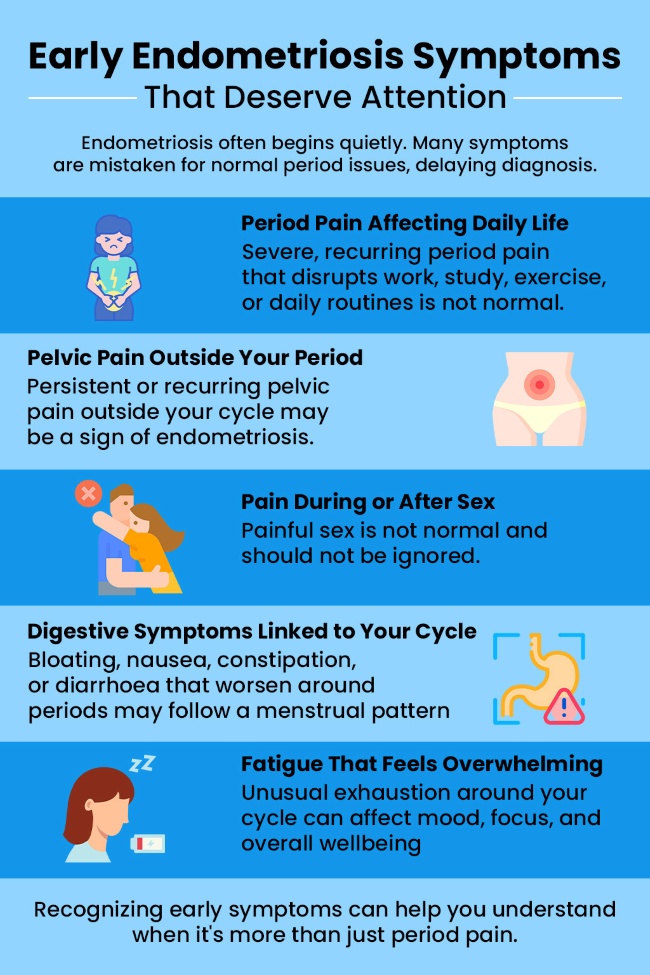
Endometriosis doesn’t always announce itself loudly at the start. Instead, it starts silently and slowly becomes part of everyday life. Many women ignore these symptoms of endometriosis as common menstrual cycle issues, making it harder to diagnose early on. However, women need to know and understand when it’s more than just period pain and how to recognise the symptoms. Some of the most common early endometriosis symptoms include:
The amount of pain women feel during their periods varies individually. However, when period pain goes beyond mild cramps on a regular and consistent basis, it’s not something to ignore. Heavy pain that affects your ability to work, study, exercise, or carry on with normal routines is not normal, even for heavy periods. If you regularly need strong pain relief or time off just to cope with your period, it may be one of the early signs of endometriosis.
Some women do experience pelvic pain during their periods. However, if you feel dull, sharp, or aching pelvic pain, or ongoing or recurrent pelvic discomfort even outside of your periods, don’t ignore it. Many women dismiss pelvic pain between periods as stress or digestive trouble, but persistent pelvic pain is a common symptom of endometriosis.
Unsurprisingly and unfortunately, this is one of the most overlooked or underreported signs of endometriosis. Women need to remember that painful sex is not ‘normal’ and shouldn’t be something you tolerate silently. Beyond the physical and emotional impact, painful sex can also be an early indicator of some deeper problem in the body.
Many women experience various challenges or issues in their bodies during their periods, which go away once the period ends. That’s why many of these concerns are often overlooked as part of the menstrual cycle. Bloating, bowel discomfort, nausea, constipation, or diarrhoea that worsen around your period are often mistaken for gut issues. However, they may not always be linked to the period, but rather an indication of some deeper problem. When these symptoms follow a menstrual pattern, they may actually be related to endometriosis.
Chronic pain takes a toll on the body and mind. Feeling unusually exhausted, especially around your cycle, can be another sign of endometriosis, particularly when fatigue affects your mood, concentration, and overall well-being.
If you recognise more than one of these symptoms, or notice they are becoming more intense over time, it’s worth paying attention. These signs are your body’s way of asking to be heard.
Your pain is real, and your experience matters. Early awareness of endometriosis symptoms doesn’t mean jumping to conclusions. It means giving your health the attention it deserves. If something doesn’t feel right, don’t ignore it. Speaking up early can make a meaningful difference to your comfort, confidence, and quality of life.
If you’re experiencing ongoing pain or noticing signs of endometriosis, having an early conversation with a GP can make a real difference. For those living around Northbourne and nearby ACT suburbs, a local GP, like GP Northbourne, can help assess your symptoms, rule out other causes, and guide you through the next steps with care and understanding.
Early signs and symptoms of endometriosis often include painful periods that interfere with daily life, pelvic pain outside of menstruation, pain during or after sex, digestive issues that worsen around your cycle, and ongoing fatigue. Symptoms can vary widely from person to person, which is why persistent or worsening pain should always be discussed with a doctor.
Endometriosis can be challenging to diagnose, especially in the early stages. There is no single test that confirms it immediately. A GP usually starts by discussing symptoms, medical history, and patterns of pain. From there, they may recommend further investigations, monitoring, or referral to a specialist if needed. Early assessment helps guide the right next steps.
The exact cause of endometriosis isn’t fully understood. Researchers believe it likely develops due to a combination of hormonal, immune, genetic, and environmental factors. What’s important to know is that endometriosis is not caused by anything you did, and ongoing symptoms deserve medical attention regardless of the cause.
Endometriosis itself does not directly cause weight gain. However, symptoms such as bloating, inflammation, hormonal changes, reduced activity due to pain, or side effects from treatment can lead to weight fluctuations. If weight changes occur alongside other symptoms of endometriosis, it’s worth discussing them with your GP.
Endometriosis can affect fertility for some women, but not everyone with endometriosis will experience fertility issues. Many women with the condition conceive naturally. Because every case is different, early assessment and ongoing care can help address concerns and provide appropriate guidance based on individual circumstances.

At GP Northbourne, we want your visit to be stress-free. Finding the right parking spot can sometimes be confusing, so we’ve prepared this simple guide to help you park with ease.