Ovarian Cancer Symptoms: When Your Body Keeps Telling You Something Isn’t Right
What This Article Covers
Learn about common ovarian cancer symptoms, why early signs are often overlooked, and discuss when persistent bloating, pelvic discomfort, or appetite changes may warrant a visit to a GP.
Why Ovarian Cancer Symptoms Are Often Overlooked
Have you been feeling tired, bloated, or experiencing stomach discomfort more often? You talk to others about it, and they dismiss it as stress, hormones, or simply the effect of busy schedules. So, you let it go until it happens again and again. That’s how slowly and subtly ovarian cancer symptoms sneak up on you. They don’t appear suddenly or dramatically. Instead, they can show up as subtle, persistent changes that are easy to overlook. This World Ovarian Cancer Day, let’s fully embrace the slogan “No Woman Left Behind”. Instead of hiding and overlooking the early signs of ovarian cancer, let’s come out and talk about it. Because ovarian cancer awareness starts with listening to our bodies and noticing when something consistently feels different.
Why Early Signs Are Often Missed
Our busy schedules and stressful lives lead to so many problems in the body, and caring for your health often takes a backseat. The early signs of ovarian cancer are quite similar to other, more common conditions, like Irritable Bowel Syndrome (IBS), menopause, stress, or digestive discomfort. In fact, many women overlook some of the most common ovarian cancer warning signs simply because they seem minor or familiar at first. That’s why many women either don’t recognise them or delay seeking advice from a GP. Doctors suggest focusing more on how often the symptoms return instead of how severe they feel.
Ovarian Cancer Warning Signs to Watch For
Not sure what counts as an ovarian cancer symptom? Here are some common ovarian cancer warning signs you should watch out for:
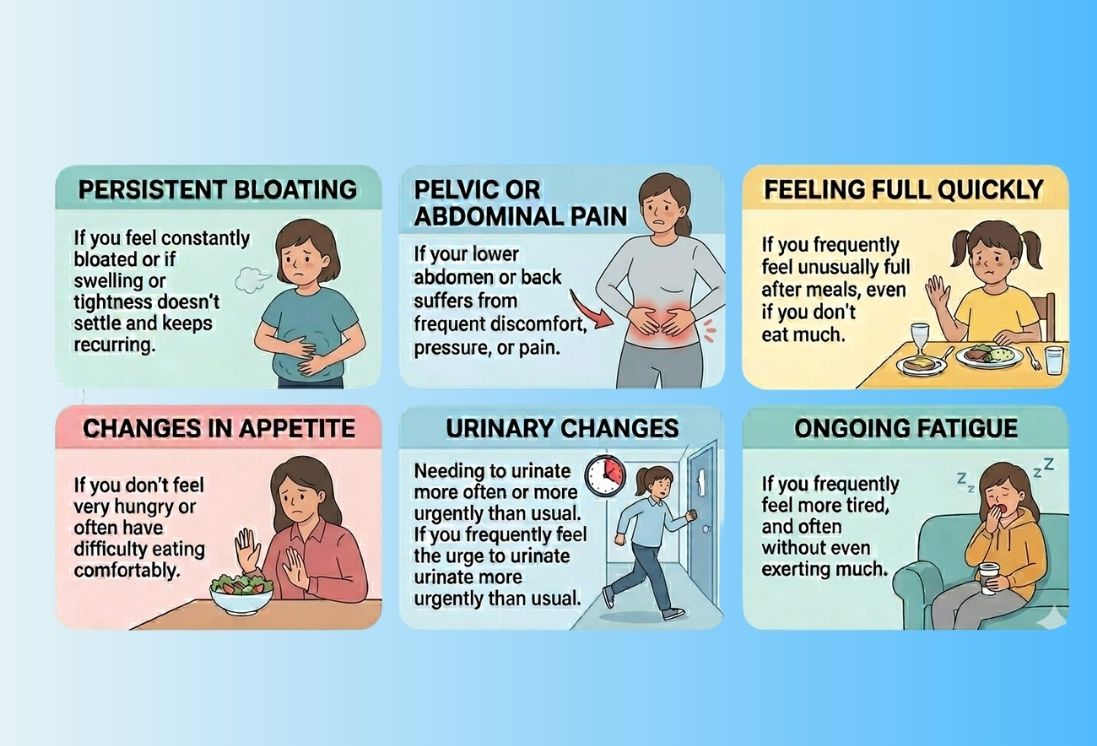
Persistent bloating: If you feel constantly bloated or if swelling or tightness doesn’t settle and keeps recurring.
Pelvic or abdominal pain: If your lower abdomen or back suffers from frequent discomfort, pressure, or pain.
Feeling full quickly: If you frequently feel unusually full after meals, even if you don’t eat much.
Changes in appetite: If you don’t feel very hungry or often have difficulty eating comfortably.
Urinary changes: Needing to urinate more often or more urgently than usual. If you frequently feel the urge to urinate more urgently than usual.
Ongoing fatigue: If you frequently feel more tired, and often without even exerting much.
Sometimes the symptoms of ovarian cancer occur with many non-cancerous conditions, making them more difficult to identify. That’s why it’s important to be aware of these symptoms and talk to a GP if they become persistent, unusual, or difficult to ignore.
Navigating an Ovarian Cancer Diagnosis
Don’t let embarrassment stop you from getting proper treatment. If you find yourself experiencing any of these symptoms often, please don’t hesitate to reach out to your local GP and discuss your symptoms and whether you need a proper diagnosis.
You’d think of going for a routine pap smear, but that’s not how an ovarian cancer diagnosis is done. Instead, your GP may ask you to come for physical examinations, blood tests, and ultrasound imaging. And based on the results, they’d advise you about the next steps. If you notice these symptoms persisting, consider keeping a simple symptom diary for a couple of weeks to track how often they occur and whether they are worsening. At GP Northbourne, we’re always ready to help you assess symptoms, arrange tests if needed, and guide you through the next steps.
Knowing Your Normal Matters
This World Ovarian Cancer Day, remember that your health and well-being matter more than any deadline or schedule. So, when your body is trying to tell you something isn’t right, you should listen. Ovarian cancer awareness isn’t about expecting the worst. It is about recognising the early signs of ovarian cancer and taking quick action. Because sometimes, paying attention to small changes early can make a meaningful difference later. Book a women’s health consultation with your local GP, or one of the doctors at GP Northbourne, and take the first step towards clarity, reassurance, and support.
Frequently Asked Questions
1. What are the early signs of ovarian cancer?
Early signs of ovarian cancer may include persistent bloating, pelvic or abdominal pain, feeling full quickly, urinary changes, fatigue, and changes in appetite that continue over time.
2. Can ovarian cancer symptoms feel like digestive problems?
Yes. Many ovarian cancer symptoms can resemble common digestive issues such as IBS, bloating, indigestion, or stomach discomfort, which is why they are sometimes overlooked.
3. Does a pap smear or Cervical Smear Test detect ovarian cancer?
No. These tests do not diagnose ovarian cancer. Diagnosis may involve physical examinations, blood tests, ultrasounds, and other investigations recommended by your doctor.
4. When should I see a GP about possible ovarian cancer symptoms?
You should see a GP if you experience persistent bloating, pelvic discomfort, appetite changes, urinary symptoms, or unexplained fatigue that continues regularly or feels unusual for your body.
At GP Northbourne, we want your visit to be stress-free. Finding the right parking spot can sometimes be confusing, so we’ve prepared this simple guide to help you park with ease.