
This article discusses the signs and symptoms of Tuberous Sclerosis Complex, how TSC diagnosis works in children and adults, and why early monitoring and ongoing care can improve long-term health outcomes.
Some health conditions follow a predictable pattern. Tuberous Sclerosis Complex is rarely one of them. Tuberous Sclerosis (TSC) or tubular sclerosis is a rare genetic condition causing non-cancerous tumours to grow in different parts of the body, like the brain, skin, kidneys, and heart. Every Tuberous Sclerosis patient experiences different symptoms and daily challenges. One person may only notice skin changes, while another may experience seizures or developmental concerns. When symptoms appear in different ways throughout the body, finding answers is not always easy. TSC Global Awareness Day reminds us that recognising subtle signs and symptoms of Tuberous Sclerosis Complex early can help families access the right support sooner.
The challenge with Tuberous Sclerosis Complex is that its symptoms vary from person to person. Some people discover the signs and symptoms of Tuberous Sclerosis in infancy, while others may find them later in life. Some may experience mild symptoms while others may need ongoing medical care. Here are some common Tuberous Sclerosis symptoms:
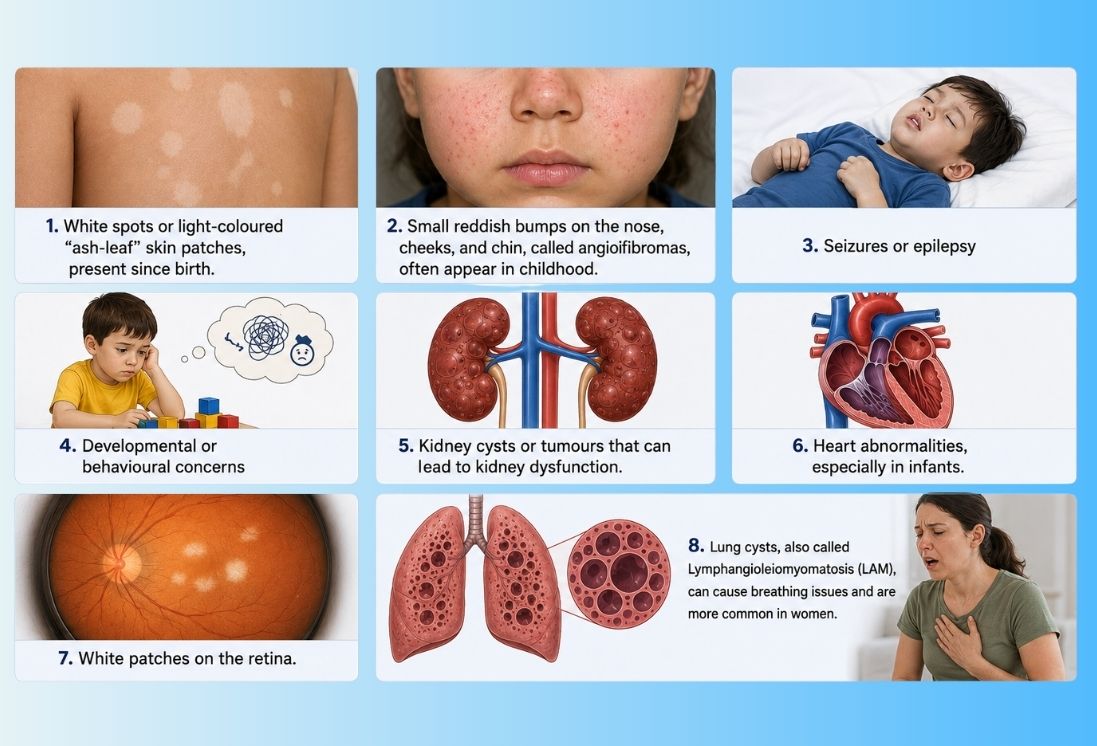
TSC affects multiple organs, and its symptoms often vary depending on the area of the body involved. Skin changes are often the first noticeable sign.
TSC is usually diagnosed in children, but it is also quite common in adults. A TSC diagnosis involves physical examinations, imaging scans, genetic testing, and specialist reviews. But diagnosing this condition is not as easy as symptoms vary widely. Chances are, you’ll discover it while checking for some other health concern. That’s why awareness regarding this disease is so important. Recognising early signs of TSC can help you monitor the condition closely and better manage long-term health risks.
Currently, there’s no cure for TSC, but with modern Tuberous Sclerosis Treatment, we can manage the symptoms and get regular monitoring. This may include neurological reviews, kidney function checks, developmental assessments, and imaging scans. However, a TSC diagnosis does not mean you will surely develop all possible symptoms. With proactive care and regular follow-up with your GP and specialist doctors, many people with TSC can lead active and fulfilling lives.
Noticed unusual white skin patches or facial bumps on your or your child’s skin? Are you or your child getting seizures or having behavioural or developmental issues? If the answer is yes, it’s time you visit a local GP and discuss these concerns. Also, if you have a family history of TSC and you’re planning a pregnancy, you must consult your family doctor or a local GP first. At GP Northbourne, we can help assess symptoms, arrange investigations, and guide you towards appropriate specialist care if needed.
Tuberous Sclerosis Complex is unique to each individual, so their healthcare should be too. This TSC Global Awareness Day, let’s raise awareness and support for this rare disease to enable early TSC diagnosis and assistance. Early support and consistent monitoring can make a meaningful difference.
You don’t have to face the challenges of TSC alone. We’re here to help and support you through this demanding journey. So, if you have concerns about any symptoms discussed above, don’t hesitate to visit your family clinic or a local GP. Book a comprehensive consultation with a doctor at GP Northbourne today and take the first step towards better health. You deserve exceptional care tailored to your needs
Tuberous Sclerosis Complex is a rare genetic condition that causes non-cancerous tumours to grow in different parts of the body, including the brain, skin, kidneys, heart, and lungs.
Common Tuberous Sclerosis symptoms include white skin patches, facial angiofibromas, seizures, developmental delays, behavioural concerns, kidney cysts, and heart abnormalities.
Yes. Although TSC is often diagnosed in childhood, Tuberous Sclerosis in adults is more common than many people realise. Some adults are diagnosed after scans or investigations for unrelated health concerns.
A TSC diagnosis usually involves physical examinations, imaging scans, genetic testing, and specialist assessments. Doctors assess symptoms across different organs before confirming the condition.
There is currently no cure for TSC, but modern Tuberous Sclerosis Treatment focuses on symptom management, regular monitoring, and coordinated care to help reduce complications and improve quality of life.
You should visit a GP if you or your child develops unusual white skin patches, facial bumps, seizures, developmental concerns, or if there is a family history of TSC and you are planning a pregnancy.


At GP Northbourne, we want your visit to be stress-free. Finding the right parking spot can sometimes be confusing, so we’ve prepared this simple guide to help you park with ease.