First Aid for Seizures: How Calm Action Can Make a Life-Saving Difference
What This Article Covers
This article explains what seizures are, how to respond calmly and safely, what to do and what to avoid in first aid for seizures, when to call 000, and why informed support truly matters.
Be the Shield: A Simple Guide to Seizure First Aid
For someone living with epilepsy, having a sudden seizure in an unknown place surrounded by strangers is the ultimate vulnerability. And for the bystanders, witnessing a seizure without knowing how to help leads to frustration and helplessness.
However, first aid for seizures isn’t just about medical steps; it’s about dignity, reducing fear, and supporting both physical safety and mental health when they need it most. You don’t need a medical degree to be their shield; you just need to be calm in their storm, anchoring them. This International Epilepsy Day, let’s take the #EpilepsyPledge and learn what you can do to help if someone’s having a seizure around you.
What is a Seizure? Demystifying the Fear
Our brain directs all the bodily systems and organs through electrical and chemical activity. A seizure is a sudden and temporary change in this activity, generating erratic impulses that affect a person’s movement, behaviour, level of awareness, and/or feelings. Think of it as a temporary electrical surge or brain reboot that usually lasts for a few minutes only. However, knowing seizure first aid can enable you to help a person having any type of seizure.
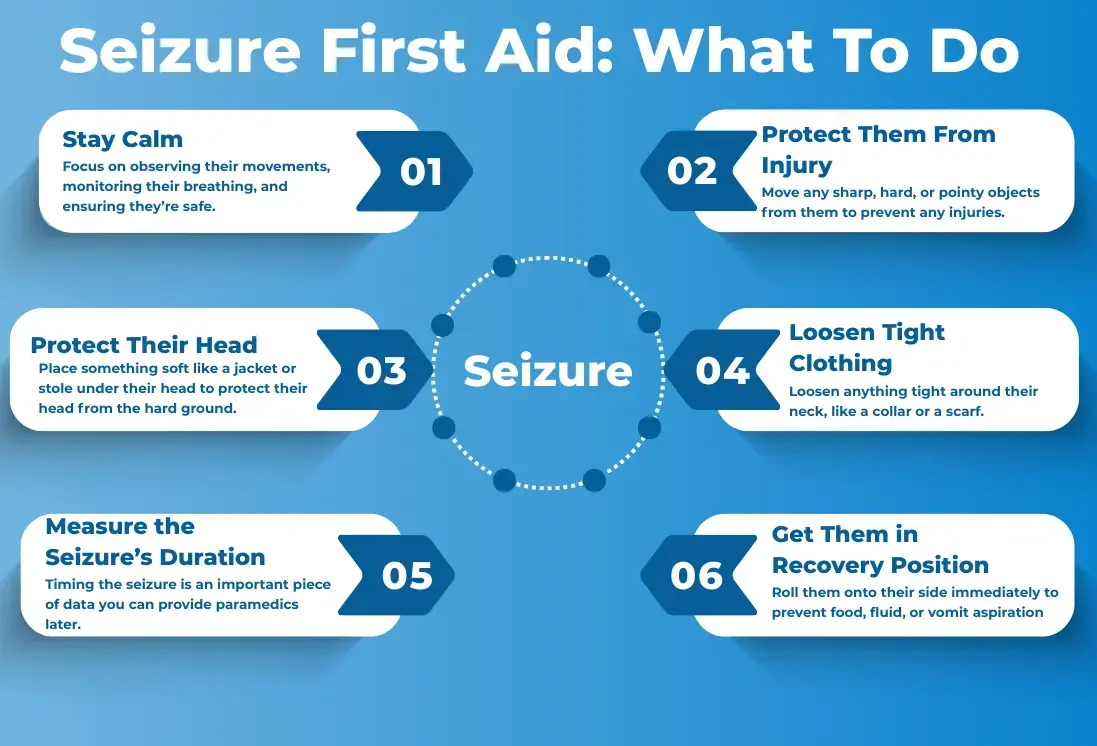
Seizure First Aid: What To Do
So, if you notice someone having a seizure around you, here’s how you can help:
Stay Calm: Focus on observing their movements, monitoring their breathing, and ensuring they’re safe.
Protect Them From Injury: Move any sharp, hard, or pointy objects from them to prevent any injuries.
Protect Their Head: Place something soft like a jacket or stole under their head to protect their head from the hard ground.
Loosen Tight Clothing: Loosen anything tight around their neck, like a collar or a scarf.
Measure the Seizure’s Duration: Timing the seizure is an important piece of data you can provide paramedics later.
Get Them in Recovery Position: Roll them onto their side immediately to prevent food, fluid, or vomit aspiration.
Afterwards, just stay close and reassure them in a low, steady voice. Simply being there until they’re able to respond can reduce their trauma.
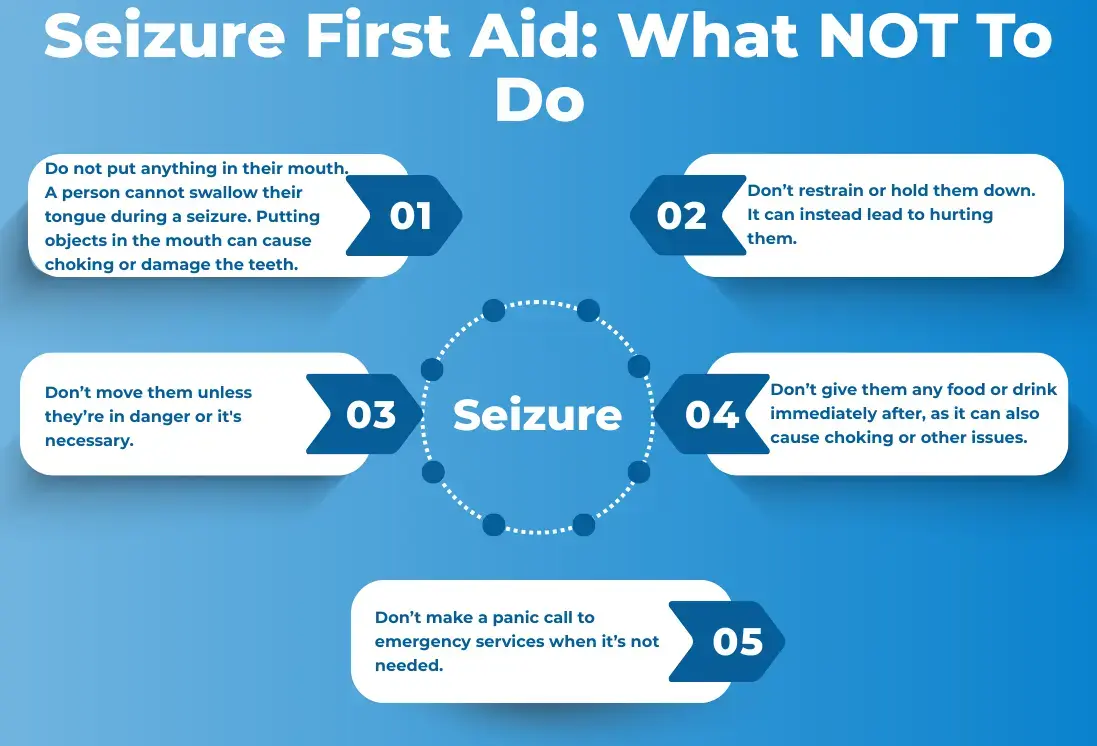
Seizure First Aid: What NOT To Do
Here’s a list of what you shouldn’t do to anyone having a seizure:
Don’t put anything in their mouth. It’s a myth that seizures cause the patient to swallow their tongue. The tongue cannot be swallowed, but putting anything in the mouth can make one choke or damage the teeth.
Don’t restrain or hold them down. It can instead lead to hurting them.
Don’t move them unless they’re in danger or it’s necessary.
Don’t give them any food or drink immediately after, as it can also cause choking or other issues.
Don’t make a panic call to emergency services when it’s not needed.
When to Call 000?
While it’s instinct to dial 000 if you sense any danger, ensure you’re not simply making a panic call. Dial 000 if:
The person is injured, pregnant, or having breathing issues.
You think it’s their first seizure.
Their seizure lasts more than 5 minutes.
They get a seizure while in water.
The person has food, fluid, or vomit in the mouth.
The seizure occurs again or keeps recurring without recovery.
They don’t wake up for more than 5 minutes after a seizure.
You’re not sure what to do.
Moving Forward Together
Epilepsy affects around 50 million people worldwide, signalling a need for awareness and understanding. Epileptic patients fight a constant battle navigating uncertainty, recovery, and the hope of stability. What they need is your understanding and calm support, not fear.
This International Epilepsy Day, awareness means more than seizure first aid. If you or someone dear has experienced a seizure, don’t wait for another emergency. Reach out to a local GP, ask questions, make an ongoing care plan, and learn first aid for seizures today.
For further information or concerns, feel free to see our clinicians at GP Northbourne to get the answers, support, and care you deserve.
Frequently Asked Questions
1. What should I do if someone has a seizure in public?
Stay calm, protect them from injury, cushion their head, time the seizure, and stay with them until they recover. Most seizures stop on their own.
2. Should I call 000 every time someone has a seizure?
Not always. Call 000 if the seizure lasts over five minutes, it’s their first seizure, they’re injured, or they have trouble breathing or recovering.
3. Can a person swallow their tongue during a seizure?
No. This is a common myth. Putting anything in the mouth can cause choking or injury and should be avoided.
4. When should I see a GP after a seizure?
If a seizure is new, changing, or unexplained, or if you’re concerned, seeing a GP is an important first step for assessment and ongoing care planning.
At GP Northbourne, we want your visit to be stress-free. Finding the right parking spot can sometimes be confusing, so we’ve prepared this simple guide to help you park with ease.