
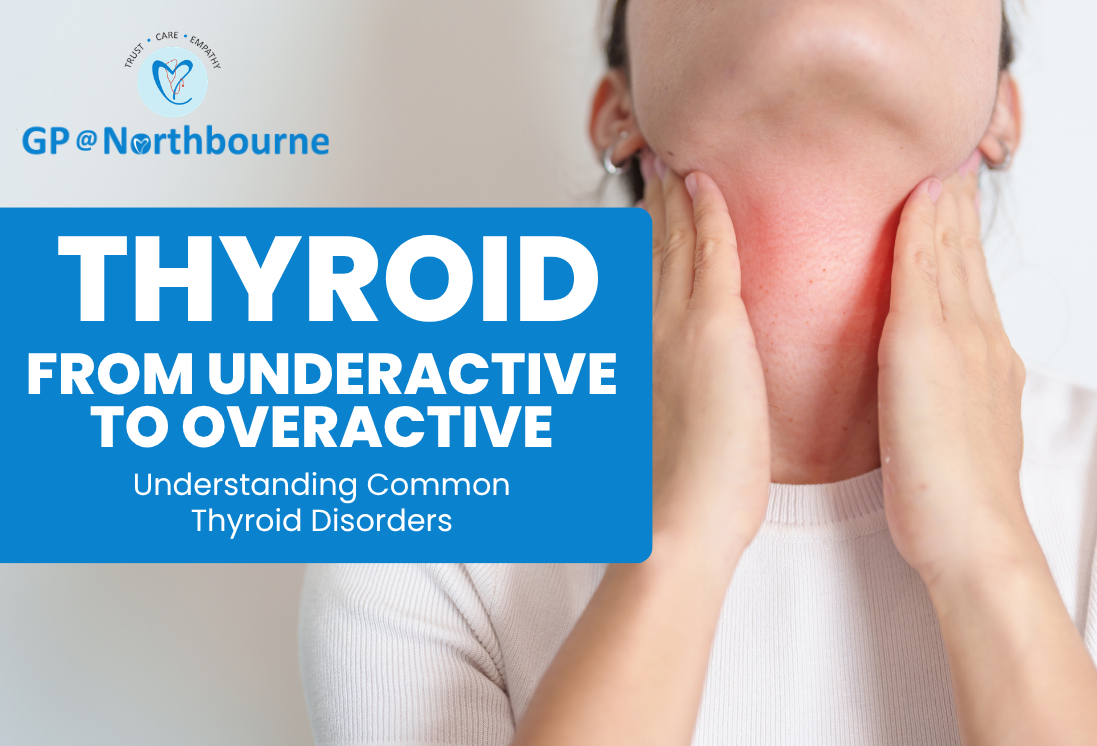
Learn the common signs of underactive and overactive thyroid disorders, including fatigue, anxiety, weight changes, and thyroid nodules, how to get a thyroid disease diagnosis, and when to visit a doctor.
Sometimes, the hardest part about thyroid disorders is how easy their symptoms are to explain away. When healthy and functioning well, this butterfly-shaped gland keeps the body running smoothly. But when it becomes overactive or underactive, everyday life can start feeling very different. Like a thermostat stuck too high or too low, thyroid disorders can push the body out of balance in very different ways. Your energy, weight, mood, and balance are all affected, making even ordinary routines feel physically and emotionally exhausting. And the most frustrating part is knowing something is off, but not being able to explain what and why. This thyroid awareness month, let’s explore the different types of thyroid disorders in brief and understand why thyroid condition awareness is important.
Your thyroid works quietly in the background every day, regulating your energy, metabolism, mood, and temperature. But when it stops functioning properly, its effects can be hard to ignore. Thyroid disorders usually involve either an underactive thyroid or an overactive thyroid. While both affect the same gland, the symptoms can feel quite opposite.
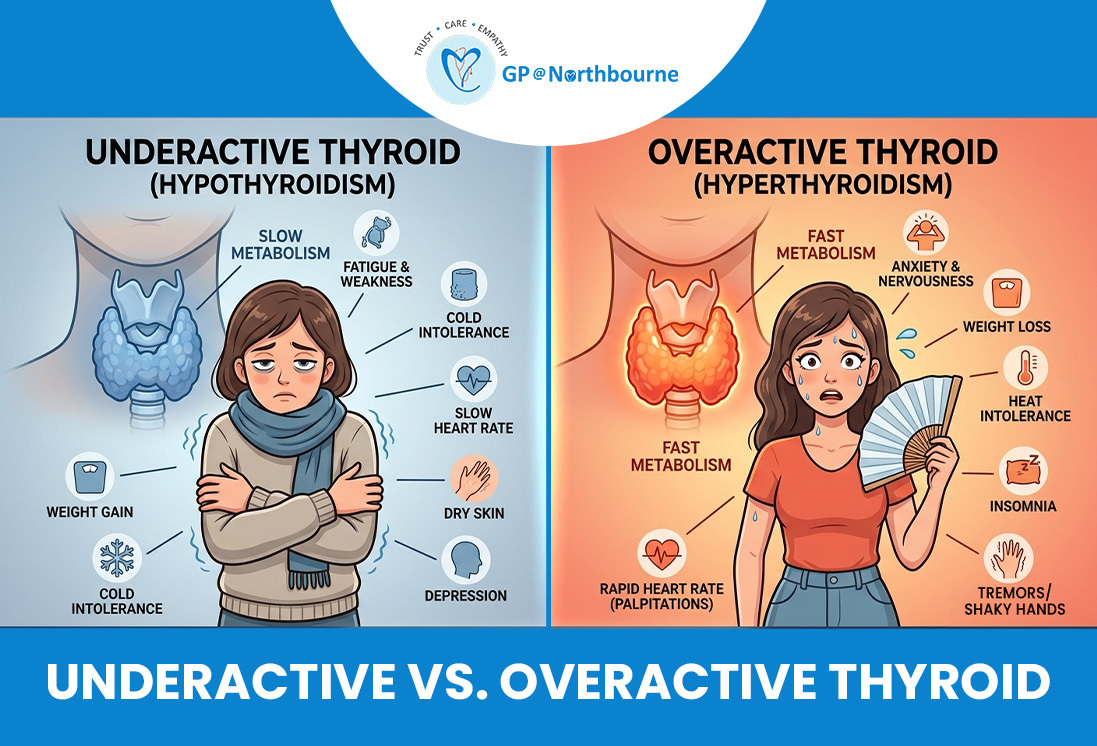
The name says it all. When your thyroid slows down and produces too little hormone, the condition is called Hypothyroidism. The common symptoms of hypothyroidism are:
You guessed it right! When your thyroid becomes overactive or ‘hyper’ and starts producing too much hormone, the condition is called Hyperthyroidism. The common symptoms of hyperthyroidism are:
Because the common signs of thyroid disease often overlap with stress, ageing, or hormonal changes, they are sometimes disregarded. Initial thyroid symptoms in women are often overlooked as they are usually hidden in plain sight. Such dismissal is one of the main reasons why thyroid disease diagnosis is often late.
Besides its functioning, some thyroid disorders also affect the gland’s shape or size. Sometimes they form small lumps within the gland, called nodules. In some cases, the thyroid gland becomes enlarged, also called Goitre. Some people may also develop thyroiditis, or inflammation of the thyroid. While most of these lumps or nodules are harmless, it’s still better to get checked. If you notice any new lump or swelling in the neck, visit your local GP or family doctor and get it checked immediately.
If you notice any of these symptoms, consult your family doctor or a local GP quickly. They will most likely arrange a simple blood test to confirm whether it is a thyroid disease diagnosis or something else. These tests check thyroid-stimulating hormone (TSH) levels to understand how the thyroid is functioning. Depending on the results, your GP may recommend further blood tests, an ultrasound, or treatment to help manage symptoms. At GP Northbourne, we work closely with patients to identify thyroid concerns early and support long-term thyroid health.
This Thyroid Awareness Month, let’s remember that different types of thyroid disorders have their own symptoms affecting the body. Knowing about these signs of thyroid disease is the first step in identifying them and getting the right help. Living with ongoing fatigue, anxiety, weight changes, or brain fog is not something you simply have to accept. Thyroid disorders are common but also highly treatable if you get the right care. If these symptoms sound familiar, book a comprehensive health check with a doctor at GP Northbourne and take the first step towards feeling like yourself again.
Common signs of thyroid disease include fatigue, unexplained weight changes, anxiety, brain fog, feeling unusually hot or cold, sleep problems, dry skin, hair changes, and heart palpitations.
Hypothyroidism occurs when the thyroid produces too little hormone, slowing the body down. Hyperthyroidism happens when the thyroid becomes overactive and produces too much hormone, causing the body to speed up.
Thyroid disorders are often linked to autoimmune conditions. Hypothyroidism is commonly caused by Hashimoto’s disease, while hyperthyroidism is frequently associated with Graves’ disease.
A thyroid disease diagnosis usually begins with a blood test that checks thyroid-stimulating hormone (TSH) levels. Your GP may also recommend additional blood tests or an ultrasound if needed
No. Most thyroid nodules are harmless and non-cancerous. However, any new lump or swelling in the neck should still be assessed by a GP
You should see a GP if you experience ongoing fatigue, unexplained weight changes, anxiety, palpitations, brain fog, neck swelling, or other persistent symptoms affecting your daily life.

At GP Northbourne, we want your visit to be stress-free. Finding the right parking spot can sometimes be confusing, so we’ve prepared this simple guide to help you park with ease.