
This article explains why early thyroid symptoms in women are often subtle and overlooked, outlines common warning signs, explores how GPs assess thyroid concerns, and highlights when it’s important to seek medical advice.
Thyroid disorders are more common, especially in women, than you think. In fact, an estimated 1 million Australians may currently be living with an undiagnosed thyroid condition, according to the Australian Thyroid Foundation. Most women fail to notice thyroid symptoms until they become a big problem. Small, inconsequential changes like regular and persistent fatigue, thinning of hair, and a sense of mental fog that’s hard to describe. Nothing dramatic, nothing that clearly signals something is wrong. For this reason, initial thyroid symptoms are often missed.
The thyroid might be a small gland in the neck, but it plays a very important role in the body. Thyroid hormones help regulate energy levels, metabolism, temperature control, digestion, mood, and even menstrual cycles. So, when these hormone levels become imbalanced, even slightly, they can have subtle yet encompassing effects in the body.
Thyroid is a predominantly women’s health concern. Women in Australia are significantly more likely than men to be diagnosed with a thyroid disorder. Symptoms of thyroid dysfunction, especially in the premature stages, are often gradual and insignificant. They build slowly, making them easier to overlook or normalize. Thyroid hormones regulate many systems in the body, so their imbalance in the initial stages can feel scattered rather than pointing to one specific problem. These elusive minor signs are easy to miss or disregarded as insignificant. That’s why thyroid problems aren’t always recognized early, particularly in women’s health.
Thyroid symptoms often resemble simple bodily issues, and they build slowly, which is why they are overlooked. For example, fatigue is considered the result of a busy schedule, weight changes get blamed on age, diet, or lifestyle, and low mood or poor concentration is explained by stress or lack of sleep. Hormonal changes can also happen from physical and emotional changes in the body. Whether it’s pregnancy, the post-partum period, or perimenopause, major life transitions also cause symptoms that closely resemble thyroid symptoms. Such resemblance makes it harder to identify whether they’re resulting from thyroid or some other issue.
According to the Australian Thyroid Foundation, roughly 1 in 10 Australians is likely to be affected by a thyroid disorder, with approximately 60,000 new cases diagnosed across the country every year. So, if the following symptoms feel familiar, you aren’t overreacting:
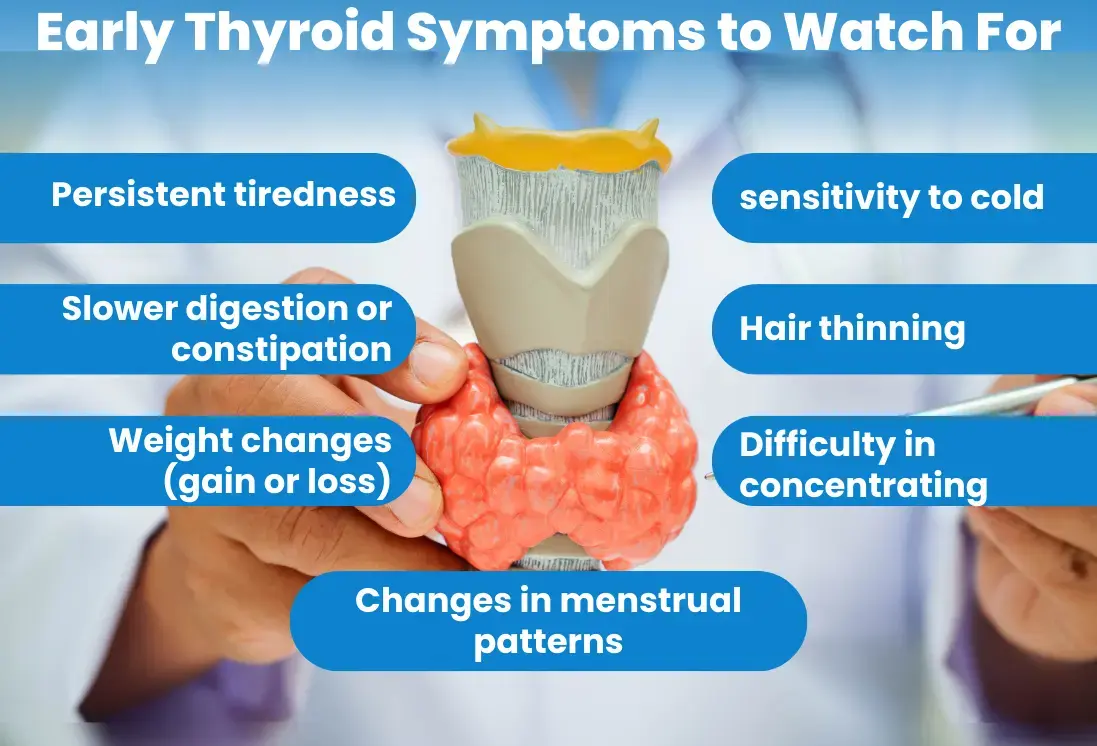
• Persistent tiredness that feels different from usual fatigue.
• Increased sensitivity to cold
• Slower digestion or constipation
• Hair thinning or changes in hair texture
• Weight changes (gain or loss) that are sudden or unexplained
• Difficulty concentrating or feeling mentally tired
• Gradual changes in menstrual patterns
When you look at them separately, these symptoms may not necessarily indicate thyroid. But if they occur together and continue for a longer time, they may be a sign of thyroid problems.
Thyroid symptoms are often similar to what you might feel in some other conditions, too. That’s why GPs consider many other factors if they suspect thyroid issues when assessing your condition. These factors include the time since the presence of symptoms, their progression, and whether you have a family history of thyroid or autoimmune conditions.
Usually, blood tests such as TSH and free T4 are used to assess thyroid function. If it’s an initial stage or a mild case and the results are borderline, you might be monitored instead of undergoing immediate treatment. Careful observation and caution in initiating treatment is a safer and appropriate approach when it comes to thyroid.
If symptoms have been present for several months, are gradually worsening, or are beginning to affect daily life, it may be worth raising them with a GP. You can bring a brief symptom timeline and any family history, in case it proves helpful.
Paying attention to subtle, ongoing changes isn’t overreacting. Talking about it to a doctor allows symptoms to be understood in context and helps ensure thyroid issues aren’t missed simply because they develop quietly. Talking to your GP can help you get appropriate testing if needed and provide reassurance when serious causes are unlikely. Listening to your body early often leads to better understanding later.
You can also contact us at GP Northbourne today for any concerns you may have.
Women are more likely to develop thyroid disorders due to hormonal influences and autoimmune factors. Life stages such as pregnancy, post-partum changes, and perimenopause can increase vulnerability and also make symptoms harder to distinguish from normal hormonal shifts.
Common indicators include high blood pressure, abnormal cholesterol levels, rising blood sugar, persistent fatigue, digestive issues, and hormonal imbalances such as irregular menstrual cycles.
Not always. In early or mild cases, blood test results may fall within borderline ranges. In such situations, GPs may recommend monitoring over time rather than immediate treatment, especially if symptoms are stable.
If symptoms persist for several months, gradually worsen, or start affecting your quality of life, it’s worth discussing them with your GP. Keeping a simple symptom timeline can help guide the conversation.

At GP Northbourne, we want your visit to be stress-free. Finding the right parking spot can sometimes be confusing, so we’ve prepared this simple guide to help you park with ease.