This article explores the key ovarian cancer symptoms and other signs that women should look out for. It also discusses why most women fail to recognise these signs early on, and when is the right time to visit a GP.
Do you feel bloated and tired more often? If you’ve been feeling ‘slightly off’ recently and thought ‘it’s probably nothing’, you’re not alone. Many women do. Women often learn to ignore these symptoms because there’s so much else to do. Some bodily changes are quiet and subtle, such as a little more bloating than usual, feeling full sooner at meals, or a sense that your energy isn’t quite what it used to be. It’s easy to assume these signs are the result of stress, hormones, periods, ageing or a busy lifestyle. But they could be signs of ovarian cancer, creeping up on you. This Ovarian Cancer Awareness Month, let’s learn more about ovarian cancer symptoms, what to look out for, and when to talk to a doctor.
There’s a reason why women are considered experts at endurance. They are great at pushing through discomfort. Even when the bodies are asking for attention, they often wait until symptoms become severe before seeking a doctor. It’s the reason why gradual bodily changes that cause minor discomfort, such as loss of appetite, nausea, or persistent fatigue, are easily overlooked. However, these could be early signs of ovarian cancer. Women need to be more aware of the signs and symptoms of ovarian cancer to recognise them early and get timely treatment.
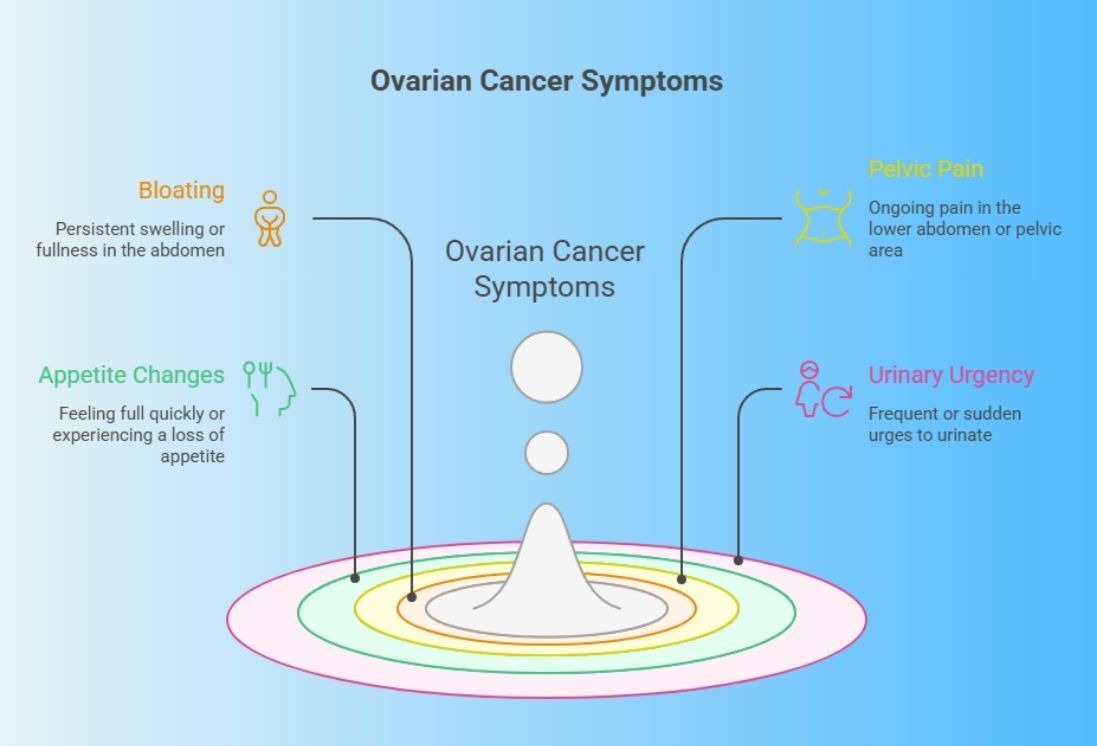
Awareness is about recognising patterns, not assuming the worst. So, when we talk about ovarian cancer symptoms, we don’t mean to stress you out. We just want you to notice subtle changes in your body and act early. Here are the key symptoms of ovarian cancer you should not ignore:
While a little bloating around periods is common, it shouldn’t persist afterwards. If you experience fullness, tightness, or visible swelling in your lower abdomen that lasts for weeks rather than days, it’s better to consult your doctor immediately.
Dull aches, cramps, or heaviness in your lower abdomen or pelvic region could be a sign of ovarian cancer. Pelvic pain is common during periods, so usually women blame their periods for it. But, if such pain or discomfort is new to you, feels unusual, or continues after periods, you should consult your GP or gynaecologist.
Noticeable changes in appetite, particularly loss of appetite or feeling full quickly, can also be a symptom of ovarian cancer. Like other symptoms, appetite loss can also result from other problems. Still, it’s better to consult your doctor if you notice it lasts for more than a few days.
Your bladder and ovaries are close together, so any tumour or swelling in the ovaries can also affect your urinary habits. If you notice feeling the urge to urinate frequently or urgently, and it lasts for more than a few days, it could be a symptom of ovarian cancer.
Apart from the ovarian cancer symptoms discussed above, there are some other signs you should also look out for:
Many of these symptoms are common and can be caused by other conditions, too. Sometimes, they can also be temporary and harmless. However, being aware of these changes and talking to a doctor is still recommended.
Your health deserves as much attention as you give to the health of others. Being aware of ovarian cancer symptoms helps you notice the changes in your body early on and get timely treatment if needed. If something feels different or persistent, trust that instinct and speak with your GP or book a consultation with one of our Doctors at GP Northbourne. A simple conversation today could bring clarity, reassurance, and greater control over your health.
Stay calm, protect them from injury, cushion their head, time the seizure, and stay with them until they recover. Most seizures stop on their own.
No. A Cervical smear is used to screen for cervical cancer, not ovarian cancer. If you’re concerned about ovarian cancer symptoms, your GP may recommend other assessments based on your history and examination.
Common warning signs include persistent bloating or abdominal swelling, ongoing pelvic discomfort, feeling full quickly, appetite changes, and urinary urgency or frequency. While these symptoms are often caused by non-serious conditions, if they persist or worsen, it’s best to discuss them with your GP.

If symptoms such as persistent bloating, pelvic discomfort, appetite changes, or urinary urgency occur most days for a few weeks, or feel unusual for your body, it’s a good idea to speak with a GP for advice
Your GP will usually start by discussing your symptoms and medical history and may perform an examination. If needed, they might recommend further tests such as imaging or blood tests to better understand what’s causing your symptoms.
Ovarian cancer is more common after menopause, but it can occur at any age. That’s why all women need to be aware of persistent symptoms and seek medical advice if something doesn’t feel right.


At GP Northbourne, we want your visit to be stress-free. Finding the right parking spot can sometimes be confusing, so we’ve prepared this simple guide to help you park with ease.