


Learn why preconception care matters, when to start, what your doctor checks during a preconception appointment, and how it can support pregnancy preparation.
If you’re thinking of having a baby, you’ve probably already started preparing in ways you don’t even realise. You may be talking about timing, discussing finances, making plans for the future, or even thinking of baby names. However, there’s one important step in planning that most people overlook: preparing your health before conception. And that’s where preconception care comes in.
Preconception care is about preparing your body for pregnancy before conception happens. It focuses on improving your health before you start trying to conceive, helping support a healthier pregnancy for you and your baby. Whether you’re planning your first baby or adding to your family, taking time to focus on your health now can give you greater confidence as you begin the journey to parenthood.
Once you become pregnant, caring for your mental and physical health and the baby growing inside you is a given. However, sometimes getting pregnant can become difficult due to certain health concerns. And trying repeatedly to conceive can be exhausting, both physically and mentally. On the other hand, if your body is already in good condition, conceiving and sustaining the pregnancy can be easier. That’s the concept of preconception health. Rather than waiting for a positive test result, you focus on improving your health and supporting your reproductive system through some dietary and nutritional changes, lifestyle support, and medical care from a trusted GP.
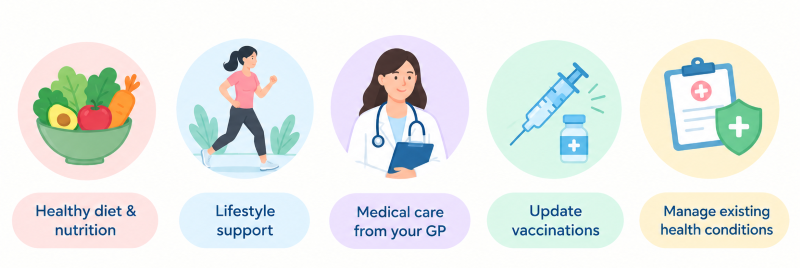
The ideal time to start preconception care is around three months before trying to conceive. If you have an existing health condition, take regular medications, or have other concerns about pregnancy, starting earlier can help you get proper medical care and prepare your body for easier conception and sustenance of pregnancy. Your GP might review your medical history, discuss current medications, check vaccinations, manage existing health conditions, and suggest changes in nutrition, exercise, and lifestyle habits tailored to your body’s needs.
You might assume that caring for your health begins after you get a positive pregnancy test. So, why is preconception care important? Just as every strong building starts with a solid foundation, a healthy pregnancy begins with preparing your health before conception. And it isn’t about making drastic changes. It’s about small, achievable steps and daily habits that help improve your overall health and reproductive well-being.
For example, your GP may recommend starting folic acid, reviewing medications that may not be suitable during pregnancy, or helping you manage medical conditions such as diabetes or high blood pressure before conception. Even small changes to your diet, physical activity, or lifestyle can make a meaningful difference when preparing your body for pregnancy. Perhaps most importantly, it gives you the opportunity to identify and address any factors that could affect your pregnancy before conception.
That’s the obvious next question. While there’s no early or late, it’s often suggested to begin preconception planning around three months before you’re going to try to conceive. It’s an adequate period for you to make some healthy changes in your lifestyle, update any vaccinations if needed, find out possible factors that could affect your pregnancy, and discuss any concerns with your GP. However, if you already have some ongoing medical conditions, take regular medications, or have had pregnancy complications in the past, you can start preparing even earlier. No matter where you are in your journey, planning for pregnancy starts with understanding your own health.
Preparing for pregnancy isn’t about being perfect. It’s about giving yourself the opportunity to enter pregnancy feeling informed, supported, and as healthy as possible. Rather than following the same preconception checklist for couples, you should talk to your GP about what’s most appropriate for you. If you’re also wondering what to do before trying to conceive, booking a preconception appointment with your local GP or a doctor at GP Northbourne is a practical first step.
At GP Northbourne, we understand that every pregnancy journey is different. If you’re thinking about starting a family, book a preconception appointment with us to discuss your questions and receive personalised guidance today.
Preconception care is about preparing your body for pregnancy before conception happens. It focuses on improving your health before you start trying to conceive, helping support a healthier pregnancy for you and your baby.
The ideal time to start preconception care is around three months before trying to conceive. If you have an existing health condition, take regular medications, or have other concerns about pregnancy, starting earlier can help you get proper medical care and prepare your body for easier conception and sustenance of pregnancy.
The primary goal is to identify and address factors that may affect your health or pregnancy before conception. It ensures your body is in the best possible position when you begin trying to conceive, making conception and the subsequent pregnancy journey much easier.
Your GP may discuss your medical and family history, medications, vaccinations, nutrition, lifestyle, and existing health conditions. They can also provide personalised advice about preparing for pregnancy.
You can ask about medications, vaccinations, lifestyle changes, existing health conditions, nutrition, and anything else you’re concerned about before trying to conceive.
Anyone planning to become pregnant can benefit from preconception care. It can be particularly useful if you have an existing medical condition, take regular medications, or have concerns about your health before pregnancy.
Preconception care gives you the opportunity to identify and address any factors that could affect your pregnancy before conception. It can also help you feel more prepared, physically and mentally, for the journey ahead.


At GP Northbourne, we want your visit to be stress-free. Finding the right parking spot can sometimes be confusing, so we’ve prepared this simple guide to help you park with ease.