

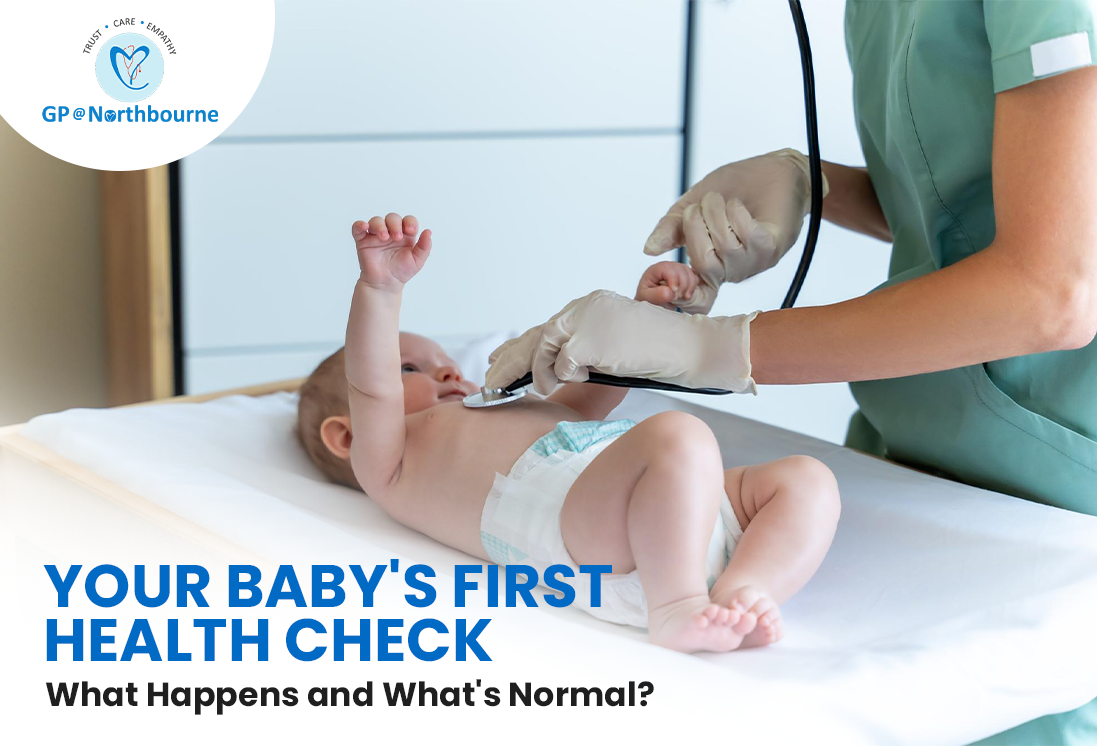
Learn what happens during your baby’s first health check, what newborn behaviour is normal, what the 6-week check involves, and when to seek advice.
When you’re a new parent, even the smallest change can leave you wondering if everything is okay. It usually starts with little things like: Is my baby feeding enough? Are they gaining enough weight? Is all that crying normal? And what about that little rash you noticed yesterday? And soon you’re so confused and uncertain that you reach for your phone and start searching. But searching for such queries online usually brings ten different answers and somehow makes you feel more confused than when you started. What your baby needs isn’t some collected knowledge, but a newborn checkup. A baby’s first health check can give you some answers and, just as importantly, a chance to ask the questions that have been on your mind. You don’t need to arrive knowing everything. That’s what the appointment is for.
Babies generally have regular health checks during their first few months, often with a GP or child health nurse. These may take place during the first few weeks, around 6–8 weeks, and at later milestones, although your baby’s needs may mean they are checked more often. Your first GP appointment is an opportunity to look at how your baby is growing and developing, while also discussing anything you’ve noticed since coming home.
A newborn health check usually involves more than simply weighing your baby. Your GP may measure their weight, length, and head circumference and record it so their growth can be followed over time. Your GP might also examine your baby’s heart and lungs, eyes, mouth, abdomen, hips, and general physical development. At this age, feeding, wet nappies, bowel movements, sleep, crying, and behaviour can tell your GP a lot about how your baby is doing. Also, if there’s anything that has been worrying you, no matter how small, you can discuss it with your GP during these routine health checks for babies and children. Sometimes a question that feels insignificant to you is exactly the kind of thing your GP can quickly clarify.
Newborns don’t always follow predictable routines. They may feed frequently, sleep in short stretches, cry for reasons that aren’t immediately obvious, and have bowel movements that change over time. Some babies also develop skin changes that can look concerning but are harmless. There is no single pattern that every healthy newborn follows. If something seems unusual, your baby isn’t feeding well, or your instincts tell you something isn’t right, it’s reasonable to ask for advice rather than trying to work it out yourself.
The 6-week appointment is another important opportunity to assess your baby’s growth, physical health, development, and overall wellbeing. Your GP can also discuss feeding, sleep, immunisations, and any concerns you’ve noticed since the earlier check. So, if you’re worried about your baby’s 6-week checkup and what to expect, think of it as both a health assessment and a chance to confirm you’re feeling confident caring for your baby.
If your baby seems unwell, or if something is worrying you, you don’t have to wait for the next scheduled appointment. You can talk to your GP or bring your baby in for a checkup too. In particular, a baby under 3 months with a temperature of 38°C or higher needs urgent medical assessment. Difficulty breathing, being unusually difficult to wake, poor feeding, or significantly fewer wet nappies also warrant prompt medical attention.
Your baby’s first health check isn’t a test of how well you’re doing as a parent. It’s a chance to understand your baby’s progress, ask questions, and get individual guidance when you’re unsure.
If you’re looking for a baby checkup in Canberra, book an appointment with GP Northbourne. Having a trusted GP to turn to can make those early months feel a little less overwhelming and give you confidence that your baby’s health is being looked after as they grow.
Babies generally have health checks during their first few weeks and months. The timing can vary depending on your baby’s health, development, and individual circumstances.
Your GP may check your baby’s growth and physical health, including weight, length, head circumference, and general development. You can also discuss feeding, sleep, crying, nappies, and any concerns you have.
Bring your baby’s health records and any relevant information about feeding, sleep, nappies, medications, or vaccinations. It can also help to write down questions you want to ask beforehand.
The 6-week check usually includes a review of your baby’s growth, physical health, development, feeding, and general wellbeing. Your GP can also discuss immunisations and answer any concerns you have.
You don’t need to wait for a scheduled check if your baby seems unwell or something concerns you. Seek prompt medical advice for symptoms such as poor feeding, difficulty breathing, unusual drowsiness, or a fever in a baby under 3 months.


At GP Northbourne, we want your visit to be stress-free. Finding the right parking spot can sometimes be confusing, so we’ve prepared this simple guide to help you park with ease.