
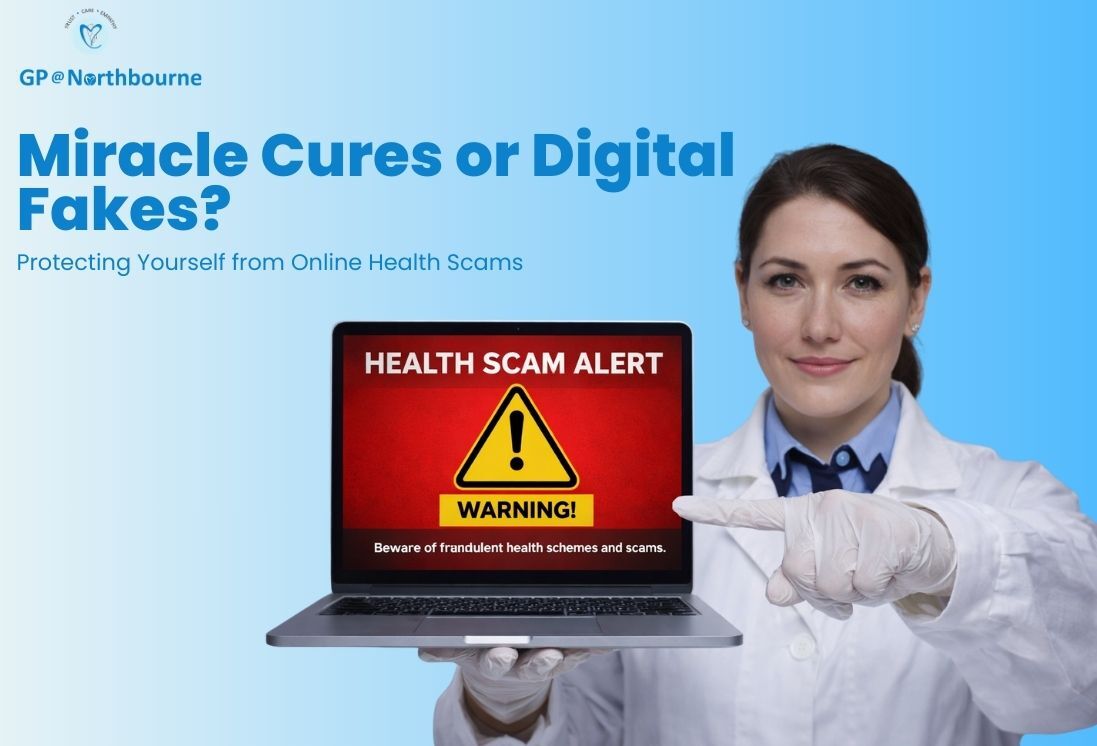
As AI becomes more and more advanced, it’s easier than ever to create convincing fake videos of health experts and doctors selling fake health products online. Here, we explore how these online health scams work, how they harm the public, and how you can spot digital health fraud.
Just imagine you or a family member scrolling through Facebook and seeing a familiar face, perhaps an Australian health icon, personally praising a “miracle” cure for diabetes. The video might look alright and promise life-changing results. But they could actually be 100% fake.
From the viral “Glyco Balance” scams to counterfeit weight-loss drops, online health scams with AI-generated deepfakes are now targeting Australians. These videos may look harmless and like well-known experts, but they’re just sophisticated miracle cure scams that sell fake health products online to steal your money. Several Australians have already encountered such health scams, often through social media advertisements. Before you or a loved one clicks “buy” on the next viral health trend, here is what you need to know about the rise of digital medical fraud.
AI technology can now recreate a person’s voice, facial expressions, and speech patterns with surprising accuracy. Health scammers use such sophisticated AI tools to create ‘deepfakes’ that look and sound exactly like trusted medical experts, and sell fake health products online. And those who buy it receive low-quality supplements, sugar pills, or products that simply do not work.
A prime example is the recent scam involving a dietary supplement called ‘Glyco Balance’, in which Professor Jonathan Shaw of the Baker Institute claimed that metformin, one of the most commonly prescribed drugs in Australia, is dangerous, and recommended fake diabetes management supplements. Other false videos promoted GLP-1 weight-loss products that Australia’s Therapeutic Goods Administration (TGA) later found contained no active ingredients.
The obvious purpose of online health scams is to steal your money. But beyond the financial loss, these fake supplement scams also pose serious health risks. The fake supplements they sell may contain unknown or unregulated ingredients or might interact with prescription medicines and hurt the body. Also, some people may delay seeking proper medical care or even stop taking prescribed medication after seeing a convincing online video promising a miracle cure.
All government-approved and regulated products are listed on the Australian Register of Therapeutic Goods (ARTG). But if you buy a supplement from an overseas social media advertisement, it may not have been verified for safety or efficacy by Australian Authorities.
So, how to spot health scams? If you pay attention, you’ll notice signs of a health supplement scam, suggesting the video is fake. Here’s how to identify fake miracle cures online:
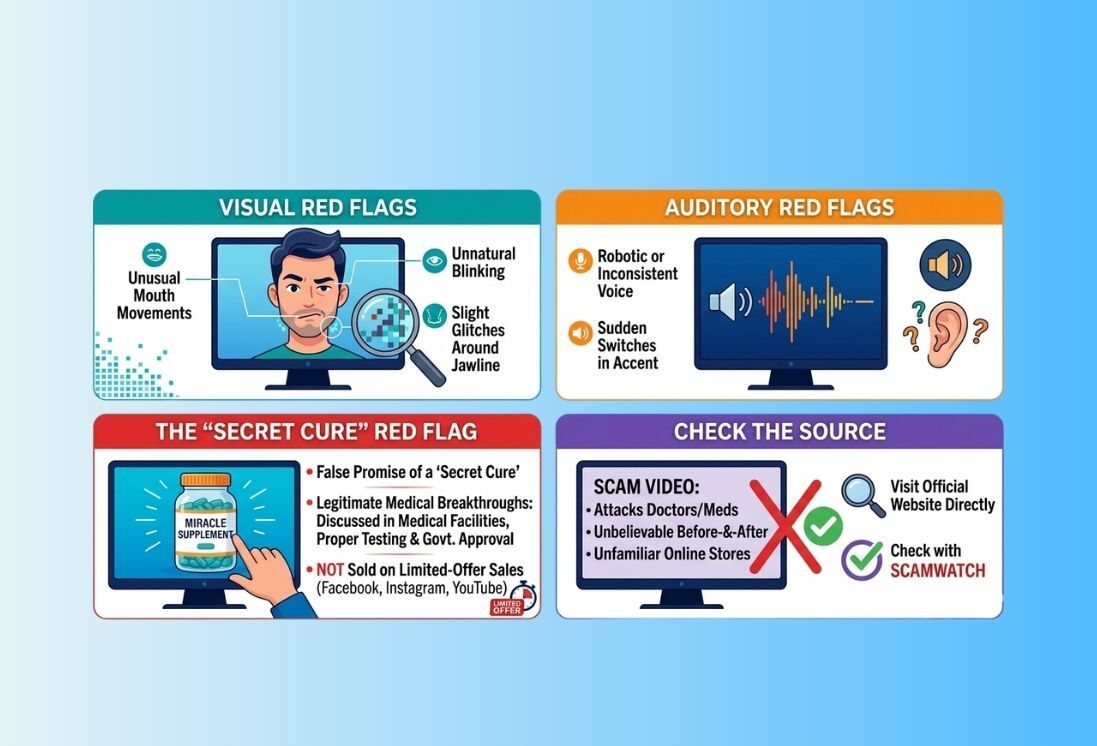
If you notice unusual mouth movements, unnatural blinking, or slight glitches around the jawline, then the video may have been digitally altered.
If the voice in the video sounds robotic or inconsistent, or the speaker sometimes suddenly switches accents, it’s another sign that the video isn’t genuine.
Another common red flag is the false promise of a ‘secret cure’. Remember that legitimate medical breakthroughs are discussed in medical facilities and platforms. They’re sold only after proper testing and government approval, not put on limited-offer sales on Facebook, Instagram or YouTube.
Many scam videos attack doctors, medications, or established treatments or institutions, show unbelievable before-and-after stories and have links to unfamiliar online stores. If you come across one and it mentions a well-known institution or organisation, visit its official website directly or check on Scamwatch rather than clicking the advertisement link.
As health advice moves from the clinic to the newsfeed, the line between medical breakthrough and online health scams has blurred. Instagram and other social media algorithms are designed to sell products, so they’ll show you what you want to see. However, online videos cannot assess your medical history, review your medications, or understand your individual health needs. Your GP can.
So, before clicking “buy” on fake health products online, consider asking your family GP or a local Doctor whether they are legitimate and safe. When it comes to your health, if something sounds too good to be true, it usually is.
Don’t click: Never provide credit card or personal details to an unverified website.
Report it: You can report suspected scams through Scamwatch or the TGA website.
Ask us: Bring the details to your next appointment, and we can help check whether the product is listed on the ARTG ( Australian Register of Therapeutic Goods).
Yes. Several cases have been reported where scammers used AI technology to create fake endorsements from doctors and medical experts to promote supplements online.
You can search for the product on the ARTG through the TGA website.
Not necessarily. Some of them may be safe, but they may not be regulated or verified for safety.
Some online health products may be safe, but many sold through Facebook or Instagram ads or unfamiliar websites are not regulated in Australia. If a product is not listed on the Australian Register of Therapeutic Goods (ARTG), its safety and effectiveness may not be verified. It’s always best to speak with your GP or pharmacist before buying supplements online.
At GP Northbourne, we want your visit to be stress-free. Finding the right parking spot can sometimes be confusing, so we’ve prepared this simple guide to help you park with ease.