What This Article Covers
Learn why some skin rashes persist, common causes and symptoms, treatment options, and when it’s time to see your GP for assessment.
When a Rash Lasts Longer Than You Expected
Most of us have had an unpleasant experience with a rash. No matter your age, location, or climate, skin rashes are surprisingly common and can affect people of all ages. Whether these red, raised patches on your skin are flat or bumpy, dry or pus-filled, itchy or scaly, most rashes are harmless and tend to resolve on their own. While the common skin rash causes are allergic reactions to various substances, some recurring rashes can also indicate other serious concerns. So, if you have a rash that doesn’t heal in a few weeks or keeps coming back, it’s worth getting some medical advice to find out the real reason behind it. Knowing what might be behind persistent skin rash symptoms can help you decide when to seek advice from your GP.
Why Do Some Skin Rashes Last Longer Than Others?
To understand this, we first need to understand that rashes aren’t a separate condition. They’re signs of another condition, and they can appear for many different reasons. Common skin rash symptoms may include redness, itching, swelling, dry or flaky skin, raised bumps, blisters, or irritation. And usually these symptoms improve once your skin has had time to heal or the trigger has been removed. However, sometimes rashes linger if their underlying cause, whether it’s an allergy, an infection, or a chronic skin condition, hasn’t yet been identified or treated.
What Could Be Causing Your Rash?
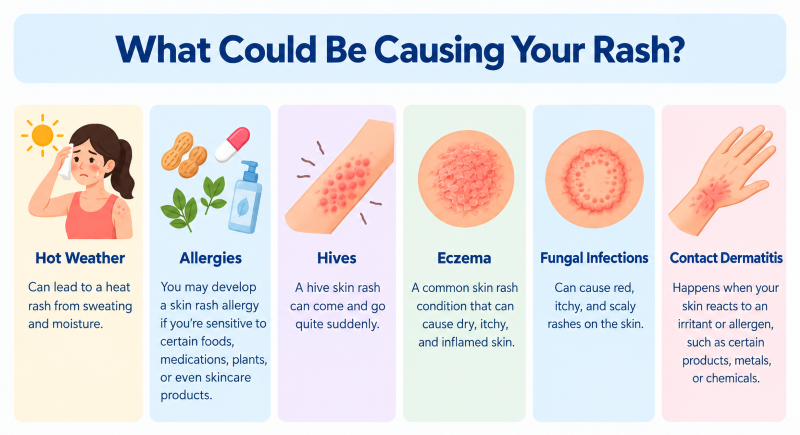
There are many types of skin rashes, and they often differ in appearance or sensation. So, it’s difficult to find the exact cause of a rash just from looking at it. It could be the hot weather that can lead to a heat rash from sweating and moisture. In fact, a skin rash from sweat is quite common, especially when all the perspiration gets trapped beneath the skin after a bout of exercise or in the summer heat.
You may also develop a skin rash allergy if you’re sensitive to certain foods, medications, plants, or even skincare products. Or you might get something like a hive skin rash that comes and goes quite suddenly. Similarly, conditions like eczema, fungal infections, and contact dermatitis are also considered common skin rash causes. Since rashes from different conditions can still look similar, it’s not always possible to determine their cause from appearance alone.
When Should You See a GP?
If your rash lasts longer than a week or two, keeps returning, spreads, becomes painful, or doesn’t improve despite home care, you should consider getting it checked. Also, if swelling, fever, or other signs of infection accompany the rashes, you should discuss it with your doctor.
Many persistent rashes result from common skin conditions. However, if you notice any skin change that doesn’t heal, continues to worsen, or looks unusual, you should get it checked by your doctor or a local GP. Recognising when such small skin changes might need medical attention can also help you spot the early signs of skin cancer and other conditions.
How Is a Persistent Skin Rash Treated?
When it comes to skin concerns and allergies, you might be tempted to learn how to treat a skin rash at home instead of in a clinic. And while mild rashes can be treated at home, you might need to avoid an allergy trigger, use moisturisers or medicated creams, take antihistamines, or manage an underlying skin condition. However, if the rash is persistent or recurring, it’s better to visit your local GP and get appropriate medical care. A proper treatment can help relieve the skin rash symptoms and also reduce the chances of recurrence.
Don’t Ignore a Rash That Isn’t Improving
A rash that lingers can be uncomfortable, frustrating, and sometimes worrying. Although many rashes are harmless, persistent or recurring symptoms shouldn’t be ignored, especially if they’re affecting your comfort or everyday life.
At GP Northbourne, we’re here to help you understand what’s causing your skin rash symptoms and recommend the most appropriate treatment. If you have a rash that isn’t improving or you’re concerned about changes to your skin, book an appointment with us for personalised advice and care.