What This Article Covers
This article explores the common causes of hard lumps under the skin, why some are painless, and when a new or changing lump needs medical assessment.
When You Suddenly Notice a Lump
Have you ever noticed a new, small, firm lump under your skin and wondered what it is? Maybe you’re getting dressed, having a shower, or simply rubbing an area of your skin when you notice something that wasn’t there before. While it might not hurt or change much, and you may otherwise feel perfectly well, discovering a new, hard lump under the skin can still be unsettling, especially when you have no idea what it is or why it has appeared. Before long, you’re searching online for answers and asking yourself whether a painless lump is something to worry about. The good news is that lumps can have many causes, and most are harmless. However, a new or unexplained lump is worth paying attention to rather than simply hoping it disappears.
What Is a Hard Lump Under the Skin?
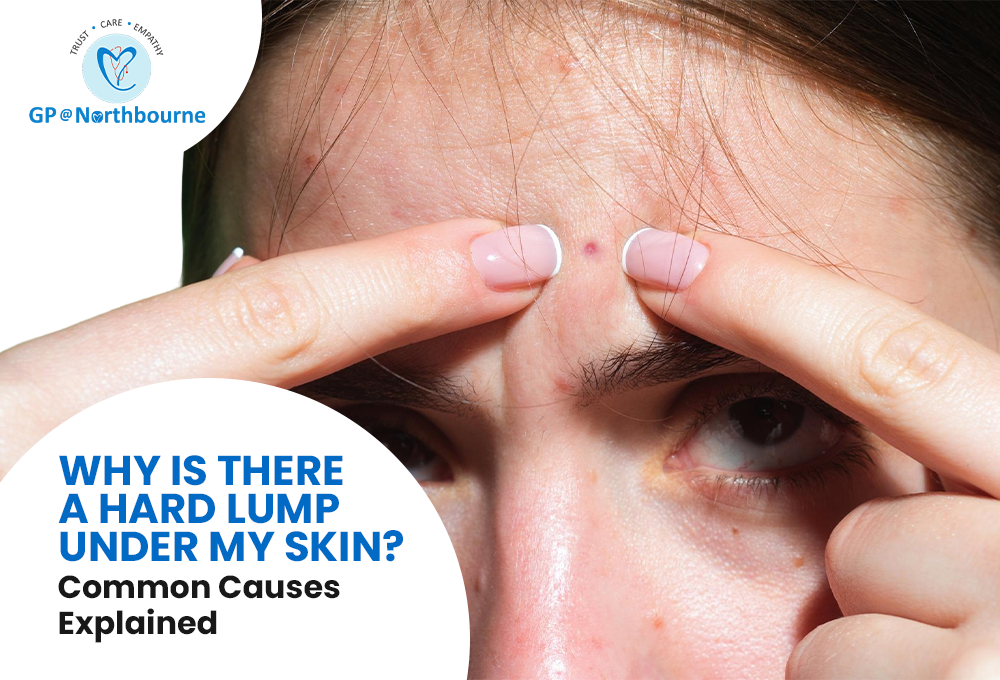
A lump is an abnormal bump, swelling, or raised area under the skin’s surface. It can develop in the skin, fatty tissue, muscle, or deeper tissues beneath the surface. They differ in size, shape, and texture, so some lumps may feel soft and rubbery, and others might be firm or hard, and they may move slightly when touched or feel more fixed in place. If you’ve noticed a hard lump under your skin and it’s causing issues or changing, knowing why it developed is important. These differences can give a GP useful clues, but simply feeling a painless lump under skin isn’t enough to determine its cause. Visit your local GP or consult GP Northbourne and discuss your concerns as soon as possible.
What Causes a Lump Under the Skin?
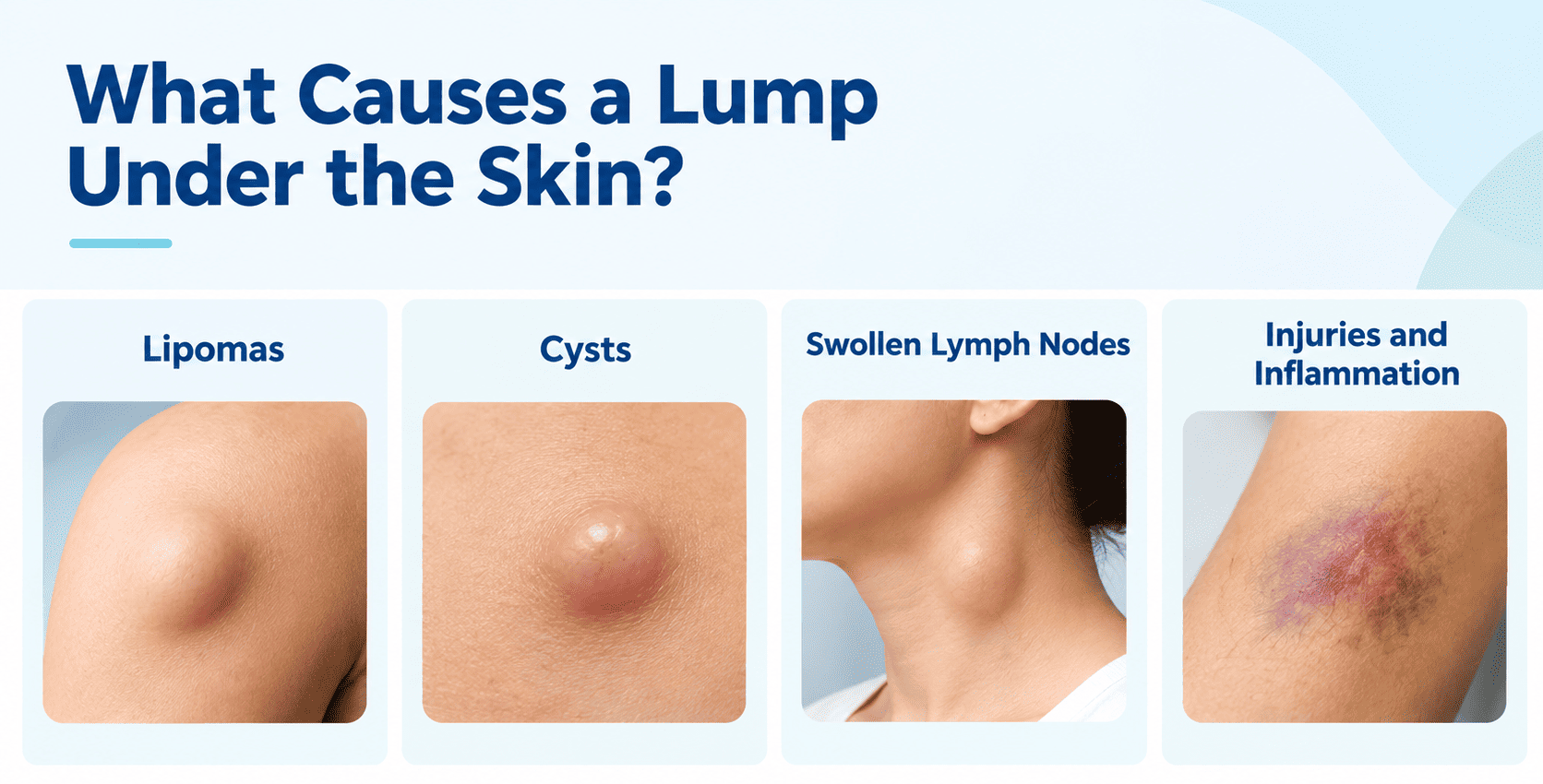
When a hard lump under the skin causes you worry, finding the reasons for its appearance is essential. There are several possible causes of a hard lump under the skin, ranging from common and harmless changes to problems that need further assessment.
Lipomas
A lipoma is a non-cancerous growth made up of fatty tissue. They often feel soft or rubbery and can move slightly beneath the skin. Many lipomas don’t cause pain or other symptoms.
Cysts
Cysts are fluid-filled or material-filled sacs that can form under the skin. They may feel smooth or firm and can remain painless, although some become swollen, inflamed, or tender.
Swollen Lymph Nodes
Lymph nodes can become enlarged when your immune system is responding to an infection or inflammation. They are commonly noticed in areas such as the neck, armpits, or groin and may settle once the underlying problem improves.
Injuries and Inflammation
A knock or minor injury can sometimes cause swelling or a firm area beneath the skin. Local inflammation can also lead to temporary changes that feel like a lump.
If the lump is in your neck, changes involving the thyroid can be another possibility. Thyroid nodules and an enlarged thyroid can sometimes cause noticeable swelling, so understanding common thyroid disorders may provide useful context.
Can a Painless Lump Under the Skin Be Normal?
Yes, some painless lumps under the skin have harmless causes. A hard lump under skin not painful can still be a lipoma, cyst, or another benign change. However, pain isn’t a reliable way to judge whether a lump is concerning. If you’re wondering why you have a hard lump under your skin that doesn’t hurt, the safest answer is that it depends on what is causing it.
When Should You See a GP About a Lump?
Consider getting a lump checked if it is growing, changing, unusually hard, fixed in place, persistent, or associated with changes to the skin, bleeding, or discharge. You should also speak with a GP if you simply cannot explain what the lump is or if it continues to worry you. A GP can examine the area and decide whether you need monitoring, imaging, or another type of investigation. At GP Northbourne, we provide assessment for lumps and bumps, cysts, and other skin changes, helping you get appropriate answers rather than being left wondering.
Getting a Lump Checked Can Give You Clarity
Finding a hard lump under skin doesn’t automatically mean something is wrong. But if a lump is new, persistent, or changing, getting it assessed can replace uncertainty with clarity. So don’t keep guessing. Book an appointment with GP Northbourne now and have your lump properly assessed, so you know what you’re dealing with and what to do next.