

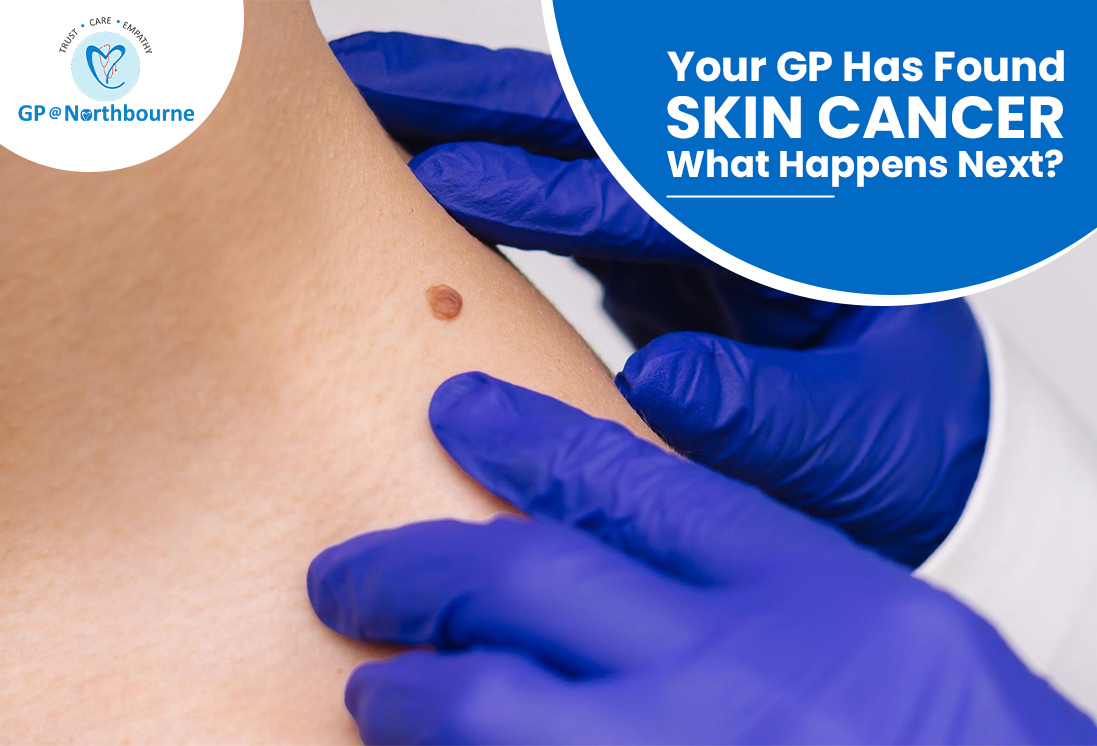
In this article, we will discuss what happens after a suspicious skin spot is found, from biopsy and pathology results to treatment, removal, recovery, and follow-up.
Imagine going for a routine skin cancer check in Canberra, thinking all’s well, and leaving with an unexpected recommendation for a biopsy or further examinations. You’ll naturally feel concerned and nervous, especially if you don’t know what happens next or what you’re supposed to do. However, a suspicious spot does not automatically mean you have skin cancer. There can be many reasons for spots to appear on the skin. Talking to a GP and getting further assessment can help you understand what the lesion is and whether you need treatment.
When you visit a GP with your concerns, they will examine the lesion for its size, shape, colour, appearance, and any changes you have noticed. Sometimes they may also use a dermatoscope for a closer look at its features. They will also consider your medical history and skin cancer risk factors associated with it. Depending on the results, they will recommend the next course of action, whether it is monitoring the spot, taking a biopsy, removing it, or arranging a specialist assessment.
Not every concern shows up as a spot on the surface. If you have noticed a firm lump under the skin instead, our guide to the common causes of a hard lump under the skin may help, and a GP can assess it as part of our Lumps and Bumps service.
A biopsy means a small tissue sample from the suspicious area is taken and examined under a microscope. Skin biopsies are of four main types: shave, punch, incisional, and excisional. Your GP will recommend which biopsy you need after checking the lesion. Your skin sample will then be sent to a pathology laboratory to determine whether the lesion is benign, precancerous, or cancerous. However, you must remember that a biopsy is just an examination. If you’re recommended a biopsy, it doesn’t necessarily mean you have cancer.
Your skin cancer biopsy results help determine what the lesion is and whether further treatment is needed. Common types of skin cancer include basal cell carcinoma, squamous cell carcinoma, and melanoma. Each behaves differently and may require a different approach. Your GP will explain the findings and discuss the next steps. These may depend on the cancer type, size, depth, location, and whether the initial procedure has removed it completely. Some patients may need further surgery or referral to a specialist.
It can help to write down a few questions before your results appointment. For example, you might ask what type of skin cancer it is, whether it has been completely removed, whether you need any further treatment, and how often you should have your skin checked in future.
Which skin cancer treatment is right for you depends on the diagnosis and your personal circumstances. For skin cancers, doctors commonly use surgical excision (removing the lesion and surrounding tissue). Some lesions need topical treatments or specialist care. Not every skin cancer is appropriate for GP treatment. Melanoma and more complex cases may require specialist care, depending on their features and the patient’s needs.
Other options include freezing (cryotherapy), topical creams and gels, and photodynamic therapy, while radiation therapy may be used for large or hard-to-reach areas. Cancer Council Australia’s guide to skin cancer treatment explains how each option works.
During a skin cancer excision, a GP trained to perform it will numb the area with local anaesthetic. They will then remove the lesion with an appropriate margin of surrounding skin and close the wound with stitches. This removed tissue is then sent for examination to help confirm the diagnosis. It checks whether the edges of the specimen are clear of cancer cells. Your GP will explain whether further treatment or follow-up is needed.
Your skin cancer biopsy recovery time will depend on the procedure, wound size, and location. You may notice mild tenderness, swelling, or bruising, but these symptoms should generally improve as the wound heals. Follow your GP’s instructions about dressings, wound care, and activity restrictions. Contact your GP if you notice increasing pain, spreading redness, swelling, discharge, or fever, as these may indicate a complication.
So, yes, you may still need further skin checks after the removal. Your GP will check your diagnosis, medical history, and individual risk and tell you if you need regular skin checks. You should also keep an eye on any existing spots and report new or changing lesions. Talk to your GP if you notice something unusual, as it can help identify concerns early.
Protecting your skin from further UV damage is just as important after treatment. In the ACT, the Cancer Council ACT SunSmart program recommends using sun protection whenever the UV Index reaches 3 or above, combining clothing, a hat, SPF50+ sunscreen, shade, and sunglasses. If you have just received a diagnosis, Healthdirect’s guide for people newly diagnosed with skin cancer is another trusted starting point.
Finding a suspicious spot can feel unsettling, but understanding your results and treatment options can make the process more manageable. If you have noticed a changing lesion or need a skin cancer doctor in Canberra, book an appointment with GP Northbourne. Our team can assess your concerns, discuss appropriate investigations, and help you understand the next steps for your skin health.
The timeframe varies depending on the pathology laboratory, type of biopsy, and whether additional testing is required. Your GP can advise when to expect your results.
No. Some spots may only need monitoring, while others require a biopsy, removal, or specialist assessment. The decision depends on the clinical findings.
Appropriately trained GPs can remove certain skin cancers within their scope of practice. More complex lesions may require referral to a specialist.
Healing time varies with the wound’s size, location, and depth. Your GP can provide an estimate and explain how to care for the wound.
Possibly. If the pathology report shows cancer cells at the edge of the removed tissue, your GP may recommend further excision or specialist assessment, depending on the cancer type and location.
Costs can vary depending on the procedure and whether pathology testing is needed. You can review our fees page or contact our team before your appointment so you know what to expect.


At GP Northbourne, we want your visit to be stress-free. Finding the right parking spot can sometimes be confusing, so we’ve prepared this simple guide to help you park with ease.