

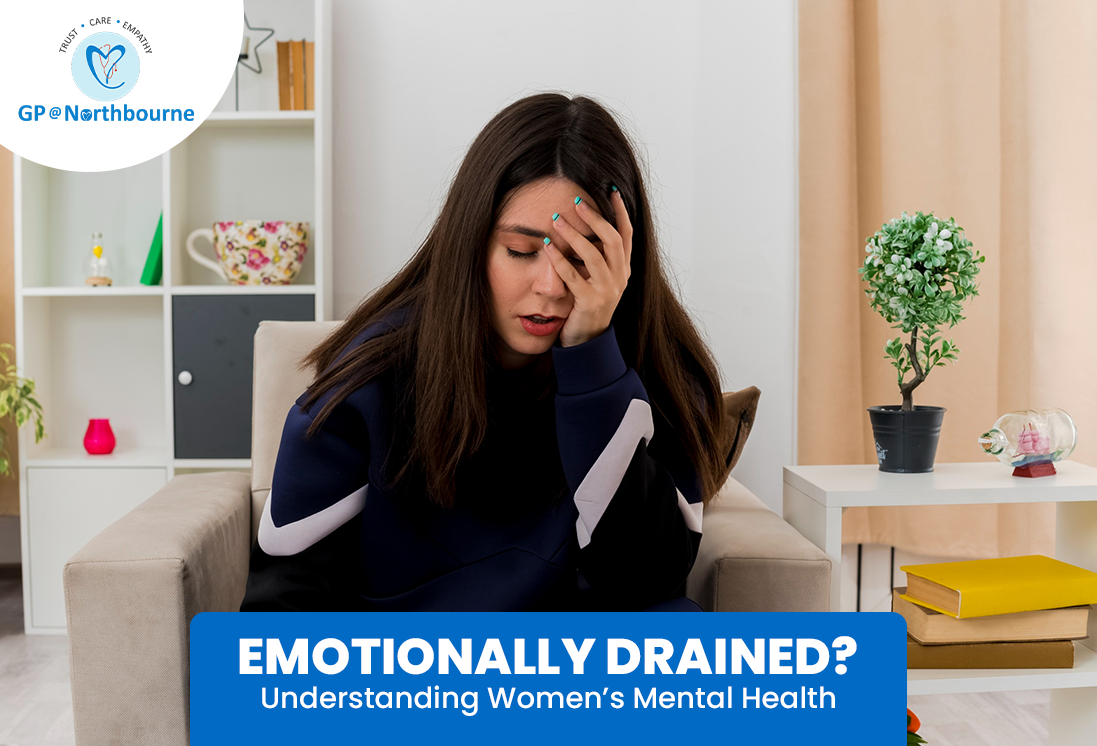
Explore why women may feel emotionally exhausted, how anxiety and depression can affect everyday life, and when professional support may help.
Are you feeling emotionally and mentally exhausted? You’re not alone. Women who manage work responsibilities, look after the family, keep up with household chores, and try to be there for everyone often end up feeling drained both mentally and physically. From the outside, everything may seem fine. But slowly, even small tasks feel exhausting, and you find yourself becoming irritable more easily, or you struggle to switch off at the end of the day. These experiences can affect women’s mental health, particularly when emotional demands continue without enough time or support to recover.
Emotional exhaustion in women can be due to several reasons. Everything from work pressures and financial concerns to relationship issues, caregiving responsibilities or major life changes can cause emotional exhaustion. Sometimes, several of these pressures build up at once, leaving little room to rest or attend to personal needs. Moreover, certain stages of life such as menstruation, pregnancy, the postpartum period, and menopause can also cause hormonal changes which can influence mood and affect emotional well-being. However, persistent emotional exhaustion should not automatically be attributed to hormones. Other physical and psychological factors may also be involved.
If you feel emotionally drained after a difficult week, that’s not necessarily a sign of a mental health condition. It’s only when these feelings persist or begin affecting everyday activities that you need to pay them more attention. One common question that most women face is deciding whether it is just stress or anxiety. Anxiety in women can involve ongoing worry, restlessness, irritability, difficulty concentrating, and trouble sleeping. You might also feel constantly on edge, even when there’s no reason to be so concerned. Similarly, symptoms of depression in women include persistent low mood, loss of interest in usual activities, reduced energy, changes in sleep or appetite, and difficulty managing everyday responsibilities. However, not everyone experiences depression in the same way, and some symptoms can overlap with other health conditions.
You don’t have to wait until you feel unable to cope before speaking with someone. Consider making an appointment with your GP if emotional exhaustion, persistent worry, low mood, or changes in your usual behaviour are affecting your work, relationships, sleep, or daily life. Your GP will ask you about what you’ve been experiencing, consider possible physical and psychological factors, and help determine whether further assessment or treatment may be appropriate. Depending on your circumstances, this may involve psychological therapy, counselling, or other forms of support. If you’re looking for anxiety counselling in Canberra, GP Northbourne offers local support with qualified and caring doctors.
Your GP can also talk with you about a mental health care plan. For eligible people with a diagnosed mental health condition, this may open the way to Medicare-subsidised sessions with an accredited psychologist. Under the Australian Government’s Better Access initiative, Medicare benefits cover up to 10 individual sessions each calendar year, and your GP can let you know whether you may be eligible.
If you’re pregnant or have recently had a baby, persistent anxiety or low mood is worth mentioning early. Perinatal anxiety and depression are common, and organisations such as PANDA (Perinatal Anxiety & Depression Australia) offer a national helpline on 1300 726 306 alongside the care your GP provides.
If you need to talk to someone straight away, Beyond Blue offers a free support service on 1300 22 4636, and Lifeline is available on 13 11 14. If you or someone else is in immediate danger, call 000. For non-urgent after-hours medical advice in Canberra, you can also contact CALMS on 02 6260 3300.
Taking care of your mental health is just as important. And it’s not so hard either. You just need to prioritise rest, regular physical activity, and supportive relationships, and take some time away from everyday pressures. However, these steps are not substitutes for professional care when anxiety or depression is affecting your life. You deserve the same attention and care you give to everyone else.
Looking after women’s mental health includes recognising when they need support, not simply finding ways to push through. If you’ve been feeling overwhelmed, emotionally exhausted, or unlike yourself for some time, you don’t have to figure it out alone. Book an appointment with GP Northbourne in Turner, ACT, to discuss your concerns and explore appropriate mental health support. Taking the first step can help you understand what you’re experiencing and what may help.
Persistent worry, low mood, irritability, emotional exhaustion, changes in sleep, difficulty concentrating, and losing interest in usual activities can all be signs of mental health difficulties.
Ongoing stress, caregiving demands, relationship difficulties, sleep problems, hormonal changes, anxiety, and depression may all contribute. A GP can help explore possible causes.
Yes. Hormonal fluctuations during menstruation, pregnancy, after childbirth, and menopause may affect mood and emotional wellbeing. The extent varies between individuals.
Stress is often connected to a particular pressure, while anxiety may involve persistent worry, and depression can involve ongoing low mood or loss of interest. These experiences can overlap, so a professional assessment can help clarify what is happening.
Consider speaking with a GP when emotional or psychological difficulties persist, worsen, or interfere with everyday life. You do not need to wait until symptoms become severe.
Medicare benefits may be available for eligible people with a diagnosed mental health condition, following an assessment with a GP. This can include up to 10 individual sessions each calendar year. Your GP can explain whether you may be eligible and what the process involves.


At GP Northbourne, we want your visit to be stress-free. Finding the right parking spot can sometimes be confusing, so we’ve prepared this simple guide to help you park with ease.