Stress and anxiety can feel similar, but their patterns and triggers may differ. This article explores what is the difference between anxiety and stress, discusses their symptoms and signs, and when to speak to a GP to understand what may be happening and what support could help.
When Stress Starts to Feel Like Something More
We all deal with stress in our daily lives, whether from a demanding week at work, a stressful fortnight cramming for exams, or high tensions at home over something. But these are situations where you expect to feel stressed, so you don’t think much of it at the time. However, what if things finally quiet down, but your mind keeps racing? You might find yourself wondering, am I just stressed, or is it anxiety? The two can feel very similar, and it isn’t always easy to tell where everyday stress ends and anxiety begins. If you notice stress and worry persisting and starting to affect your daily life, procrastinating won’t help. It’s better to talk to a GP and get professional advice.
What Is the Difference Between Stress and Anxiety?
Many people don’t know that anxiety and stress are two different conditions related to mental health. You might start feeling stressed, and it can go on to become anxiety without you even realising it. So, what is the difference between anxiety and stress? Stress is usually your response to a specific challenge or pressure, such as a deadline, relationship difficulty, financial concern, or exam. It often eases once the situation improves. On the other hand, Anxiety can involve ongoing fear, worry, or unease that continues even when there is no immediate threat or obvious reason for it. However, stress can also contribute to anxiety, and the two can occur together.
Work Stress, Student Stress, and Everyday Pressure
Work stress vs anxiety can be difficult to distinguish when deadlines, workload, conflict, or uncertainty are ongoing. Similarly, student stress vs anxiety may involve understandable pressure around exams and assignments. The key is not simply how stressful your circumstances are, but how you are feeling, how long it has been happening, and how much it is affecting your life. So, how do you know the difference? There are some symptoms that can feel different in stress vs anxiety.
Stress vs Anxiety Symptoms: How Can They Feel Different?
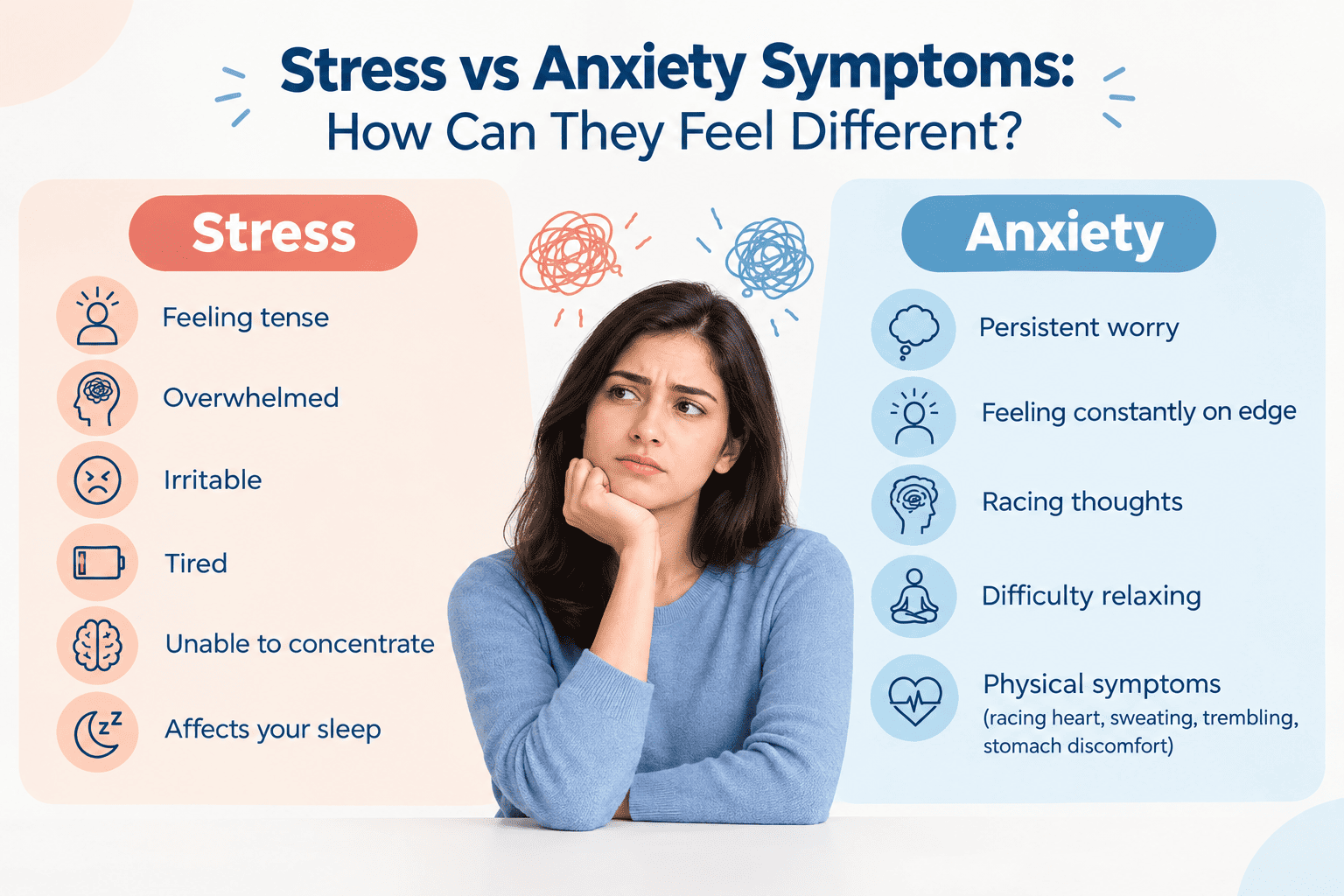
Both stress and anxiety are similar in many ways. However, stress vs anxiety symptoms can overlap, which is why trying to label every symptom can be confusing. Instead, you should look at their symptoms from a different context. Stress may leave you feeling tense, overwhelmed, irritable, tired, or unable to concentrate, and it can affect your sleep. Anxiety may involve persistent worry, feeling constantly on edge, racing thoughts, difficulty relaxing, or physical symptoms such as a racing heart, sweating, trembling, or stomach discomfort. However, experiencing these symptoms does not automatically mean you have an anxiety disorder; it can be some other underlying issue, too. Don’t keep dismissing your symptoms as stress. Visit your local GP or consult GP Northbourne about your symptoms today and get the clarity you need.
Book a consultation with GP Northbourne and get answers to all your concerns.
Signs You May Be Dealing With More Than Everyday Stress
How to know when it’s time to talk to the doctor? There are often some patterns that are visible in people who are stressed or suffering from an anxiety disorder. You may notice that you cannot control your worrying, and it continues even after a stressful situation has passed. You may also find yourself worried or anxious without an obvious trigger, or it may lead you to avoid things you would normally do. It may affect your sleep, relationships, work, studies, or even daily activities. These are signs that your mind is struggling and may need help. However, you don’t have to work out the answer by yourself.
You Don’t Have to Figure It Out Alone
You don’t need to decide “Am I just stressed or is it anxiety?” before asking for help. If you have ongoing stress symptoms, your worry feels difficult to manage, your sleep is consistently affected, or you’re avoiding normal activities, it’s worth talking to a GP. Rather than self-diagnosing, a GP can help you understand what you’re experiencing, determine whether it may be an anxiety disorder, and discuss appropriate support. Ongoing mental health concerns can also be part of broader chronic disease care, where longer-term support may be needed. Take the first step towards feeling more in control of your mental health. Talk to your GP or one of the doctors at GP Northbourne today and get the support you deserve.
Frequently Asked Questions
1. How can I tell if I'm stressed or anxious?
Stress is often linked to a specific situation, while anxiety may continue beyond the situation or occur without an obvious trigger. The symptoms can overlap.
2. Can stress turn into anxiety?
Ongoing or intense stress may contribute to anxiety, although not everyone who experiences stress develops an anxiety condition.
3. What are the physical symptoms of anxiety vs stress?
Both can cause headaches, muscle tension, sleep problems, and stomach discomfort. Anxiety may also involve symptoms such as a racing heart, trembling, sweating, or feeling constantly on edge.
4. When should I see a GP about anxiety?
Consider speaking with a GP when worry persists, feels difficult to control, affects sleep or daily activities, or starts interfering with work, study, relationships, or things you normally enjoy.
5. Can anxiety happen without a stressful situation?
Yes. Anxiety can sometimes occur even when there is no obvious immediate stressor, which is one reason professional assessment can be helpful.
At GP Northbourne, we want your visit to be stress-free. Finding the right parking spot can sometimes be confusing, so we’ve prepared this simple guide to help you park with ease.