You’ve Been Told You Have Prediabetes. What Happens Next?
What This Article Covers
Prediabetes means your blood glucose is higher than normal but not yet in the diabetes range. It often has no obvious symptoms. This article discusses what prediabetes means, what your results may show, and the practical steps that can help protect your future health.
You Feel Fine, So Why Prediabetes?
Sometimes your health results can catch you off guard when you least expect it. You may have gone for a routine blood test feeling perfectly well, only to be told that your blood sugar is higher than it should be. Instead of the ‘everything’s fine’ that you were expecting, your GP mentions prediabetes, and you start wondering how it’s possible, what if you develop diabetes, and what happens next.
Hearing the word prediabetes after a blood test can come as a surprise if you don’t see any obvious prediabetes symptoms. The good news is that being prediabetic does not mean you have type 2 diabetes. It means your blood glucose is higher than the usual range, but not high enough to be called diabetes. So, instead of panicking, you should take this as an opportunity to make changes that may help reduce your future risk.
What Is Prediabetes?
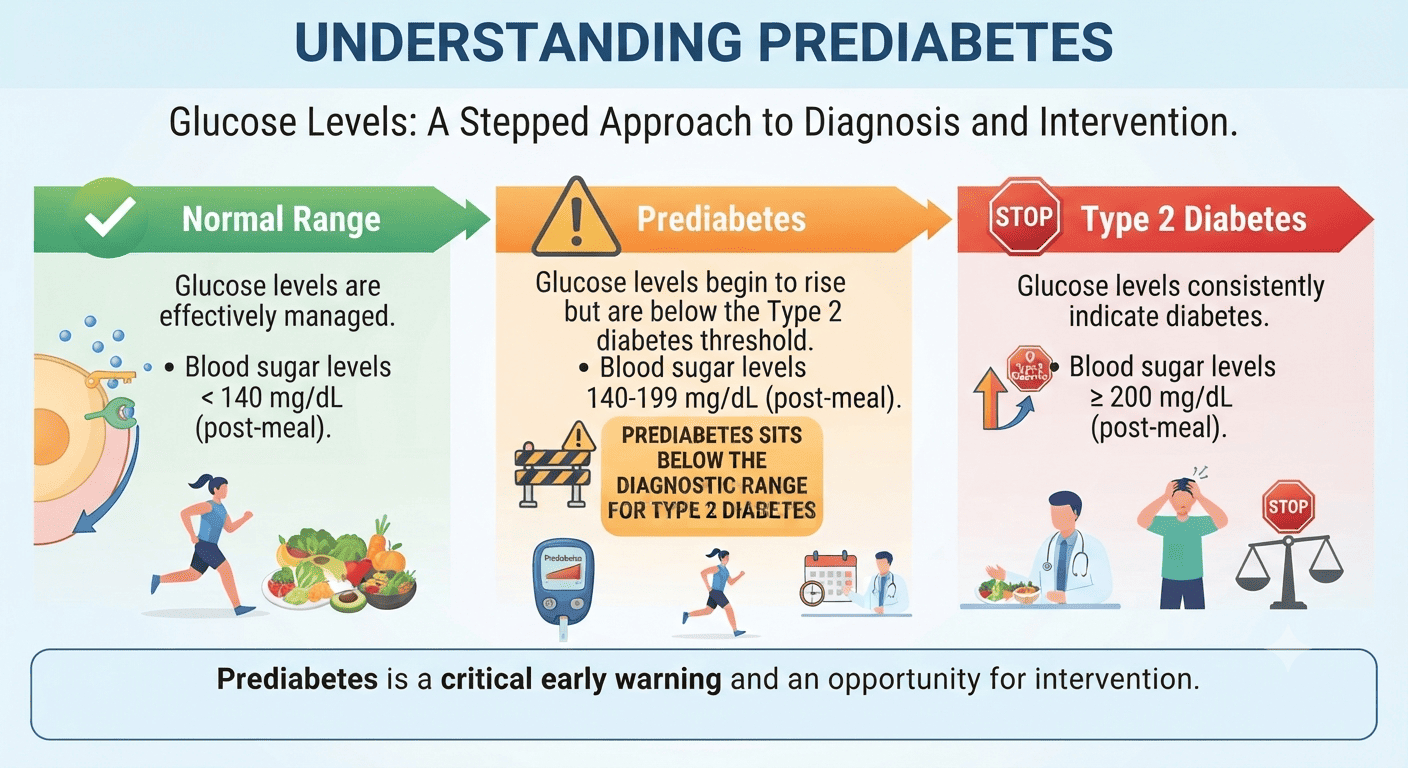
So, what is prediabetes exactly? When your body is no longer responding to insulin as effectively as it should, the glucose levels in the blood begin to rise. This condition, where glucose levels rise but are not as high as in diabetes, is called prediabetes. Prediabetes can increase the risk of developing type 2 diabetes, which is a chronic disease. However, it doesn’t mean such progression to diabetes is inevitable. Other factors, including excess weight, can also affect metabolic health, so understanding the early signs that your weight may be affecting your health can be useful. Prediabetes sits below the diagnostic range for type 2 diabetes, which means early action can be worthwhile. This is the key difference when comparing prediabetes vs type 2 diabetes.
Understanding Your Prediabetes HbA1c Range
HbA1c is a blood test that reflects your average blood glucose over roughly the previous 8 to 12 weeks. In Australia, an HbA1c of 6.0–6.4% (42–47 mmol/mol) is considered a high-risk range for developing type 2 diabetes. An HbA1c of 6.5% (48 mmol/mol) or higher may indicate diabetes and generally requires confirmation. However, along with these results, you should also consider other test results and your individual circumstances.
You May Not Feel Any Different
You might wonder how you’d fail to notice if your blood sugar is rising. You’d think the body would give you some obvious signs. But one of the confusing things about prediabetes symptoms is that there often aren’t any. Many people discover prediabetes through routine blood tests rather than because they feel unwell. And there’s not much difference in the symptoms of prediabetes in females and males either. And even if there are some signs, they’re usually subtle and not enough to confirm prediabetes. So, if you’ve recently been told you have prediabetes, or you’re concerned about your blood sugar levels, consider speaking with a local GP or visiting GP Northbourne to understand your results and decide what to do next.
What Happens Next? Start With Small Changes
A prediabetes diet doesn’t need to mean giving up everything you enjoy. A balanced eating pattern built around vegetables, wholegrains, fibre-rich foods, lean proteins, and healthy fats can support better blood glucose management. Your GP or dietitian can help you work out what a proper diet for prediabetes looks like for you. Regular physical activity can also help your body use glucose more effectively. Even practical changes, such as walking more often or finding an activity you enjoy, can be a useful place to start. So, if you’re noticing changes in your weight and are concerned about it, understanding when early symptoms of obesity may need medical attention can help you decide when to speak with your GP.
Prediabetes Doesn’t Mean Diabetes Is Inevitable
Being told you have prediabetes can feel like a warning you didn’t expect. But it also gives you an opportunity to understand your health and make changes before your blood glucose reaches the diabetes range. Your next step doesn’t have to be a complete lifestyle overhaul. Healthy eating, physical activity, and personalised medical advice can help reduce the risk of progressing to type 2 diabetes. Book an appointment with GP Northbourne today to understand your results, discuss your risk, and create a practical plan for your health.
Book a consultation with GP Northbourne and get answers to all your concerns.
Blood glucose levels can return to a healthier range for some people after lifestyle changes, but individual results vary. Ongoing monitoring remains important.
2. What are the common symptoms of prediabetes?
Prediabetes usually causes no noticeable symptoms. This is why it is often identified through blood testing.
3. What is the prediabetes HbA1c range in Australia?
An HbA1c of 6.0–6.4% (42–47 mmol/mol) is considered a high-risk range for type 2 diabetes.
4. What foods should you avoid with prediabetes?
Rather than focusing on completely avoiding individual foods, aim for a balanced eating pattern and limit highly processed foods and excess added sugars. Individual advice can vary.
5. How often should I have my blood sugar checked with prediabetes?
Follow-up timing depends on your results and risk factors. People with prediabetes are generally monitored at least annually, but your GP can recommend an appropriate schedule.
At GP Northbourne, we want your visit to be stress-free. Finding the right parking spot can sometimes be confusing, so we’ve prepared this simple guide to help you park with ease.